Using an AI-first approach, we cost-effectively delivered a kid-friendly iPad app for Planet 9 that teaches life skills.
Planet 9 Studio is a venture studio focused on building inclusive, human-centered products that help people learn, grow, and thrive. Within that broader mission, Neelo was conceived as a gamified learning app designed to help children build essential life skills through interactive activities, games, and rewards.
The concept began with a focus on neurodivergent children ages 5–10. As research and testing progressed, it became clear the product could serve a much wider audience. What began as a product designed to support a specific niche revealed a broader market need: the same product principles that could support neurodivergent children also addressed a wider market gap for children learning how to navigate friendships, social dynamics, change, and emotional responses.
Planet 9 had already validated the idea with research and a prototype. The app needed to be rebuilt as a production-ready product, with a foundation that could support growth, iteration, and long-term product development.
Planet 9 partnered with Fueled to build Neelo: an iPad app built from the ground up using an AI-first development approach that paired AI tools with experienced product and engineering leadership. By pairing technical frameworks like Flutter and the Cursor development environment with a disciplined, incremental process, Fueled helped Planet 9 soft-launch the app at roughly 10% of the cost and in about half the time when compared to similar projects delivered before 2025.
From promising prototype to scalable product
Planet 9 came to Fueled after creating a prototype with Cursor. The prototype helped validate the concept, but it had reached a familiar limit: it had not been engineered in a way that was scalable, sustainable, or extendable enough to support a production app.
In practical terms, the problem was not simply that the prototype was unfinished. It was that the underlying approach stopped being reliable as the product grew. As the AI-generated codebase grew, outcomes became less predictable, context management became problematic, and teams lost visibility into how the application actually works. That made it difficult to refactor confidently, extend the product, or treat the prototype as a real foundation for production.
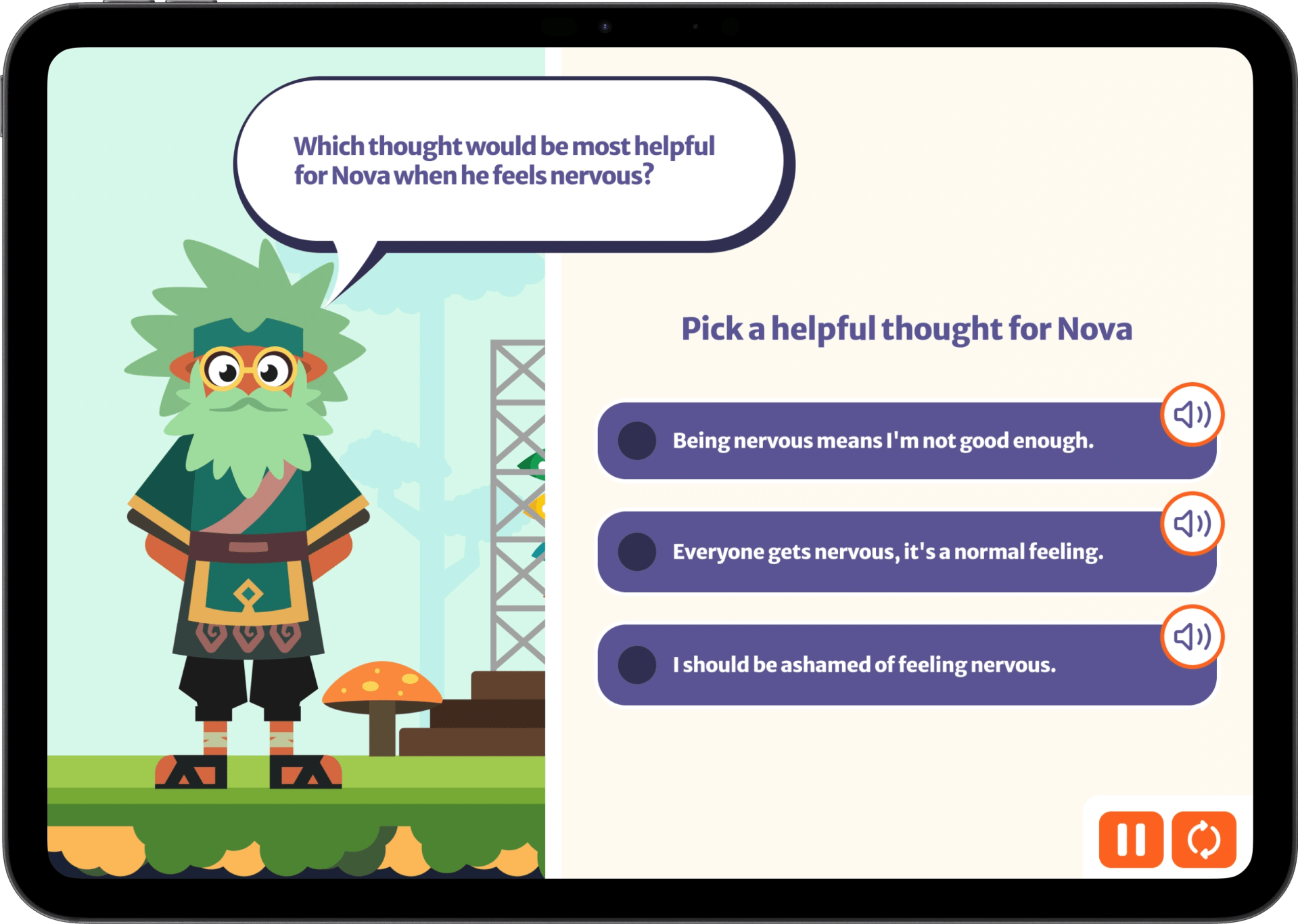
For Neelo, that challenge was especially apparent, given the app’s complexity: narrated content for young children, custom UI, animation, a character customizer, multiple game types, and a structure designed to grow over time.
Fast, iterative delivery
Planet 9 approached Fueled with a clear ask: preserve the speed advantages of AI-assisted development, but rebuild the app in a way that was sustainable, scalable, and ready for long-term growth.
Planet 9 had already done substantial research, had conviction around the product opportunity, and embraced iterative and nimble product decision making. Rather than requiring multiple layers of sign-off before every change, Planet 9 empowered the product owners to make quick decisions such that our team could refine UX and interface details and keep delivery moving.
That kind of working partnership mattered. An AI-first approach works best when the client is open to iteration, understands the tradeoffs introduced with an accelerated timeline that leverages AI’s benefits and constraints, and trusts an experienced product team to make informed decisions during delivery.
Building Neelo from the ground up
Fueled built Neelo from scratch, carrying forward the learnings from the prototype while establishing a new foundation for a production-ready product, built with safety and security in mind.
An AI-first workflow grounded in product and engineering discipline
AI was not used as a substitute for product and engineering rigor. Fueled applied it within a structured, incremental process guided by experienced practitioners.
That meant defining component libraries and design tokens up front, structuring features in layers, keeping the code understandable, and preserving the ability to refactor and extend the application over time. The result was faster delivery, but not at the expense of clarity or control.
That distinction gets to the heart of Fueled’s AI-first philosophy. The speed gains came from using AI inside a disciplined build process, informed and influenced by a set of practices and standards encoded in our prompts. The tools accelerated execution. They did not replace judgment, structure, or accountability.
Choosing the right stack for speed, longevity, and privacy
Fueled rebuilt the app using Flutter for the client application and Cursor as the development environment for AI-driven agentic development.
Flutter was a strategic choice for two reasons. First, although Neelo launched as an iPad app, Flutter set the product up for possible expansion to other platforms without requiring a separate codebase. Second, it was a strong fit for a product with a highly distinctive and custom UI, animation, and game-like interactions. For Planet 9, that meant moving quickly on an iPad-first launch without locking the product into a single platform.
Translating a rich product vision into a polished app experience
Neelo includes a highly custom interface, rich animation, a character customizer, a world map, shops for unlocking items, narrated educational content, and multiple reusable game types tied to different learning modules. Those modules were built around the kinds of social and behavioral concepts Planet 9 had researched from the start, including how children understand relationships, adapt to change, and respond to different situations.
Planet 9 brought the research, the core concept, and the in-house design work. Fueled’s role was to execute the product technically while strengthening the experience for mobile and tablet use. We collaborated closely with the client team to adapt designs where needed, make them achievable in product form, and improve the UX where it would have the most impact.
Fueled also built the app to support expansion. For example, new assets could be added without code changes using a simple, structured format (JSON) and surfaced automatically in the app.
Delivering more with less
In comparison to a similar project from prior years, Neelo was completed in half the time and at 10% of the cost.
That efficiency showed up not only in ways small and large. The character customizer, for example, was described as the kind of feature that might previously have taken months, yet was largely completed in about a week.
AI-first delivery can materially change the economics of building sophisticated digital products, not only by reducing cost and timeline, but by making it possible to launch a content-rich, game-like experience without carrying prototype debt into production.
A better path from prototype to product
Fueled established a product foundation for Planet 9 built for growth: a scalable, extensible app designed to evolve with its audience, support a broader market, and protect the privacy of the children it serves.
Just as importantly, it shows what AI-first product development can deliver when applied with discipline and guided by expertise. Fueled embedded its standards and practices directly into the tools and workflows used to build Neelo, shaping how AI was applied at every step. That foundation accelerated execution, while experienced practitioners remained closely involved, guiding decisions and ensuring quality. The result for Planet 9 was not just faster output, but a more reliable path from prototype to production.