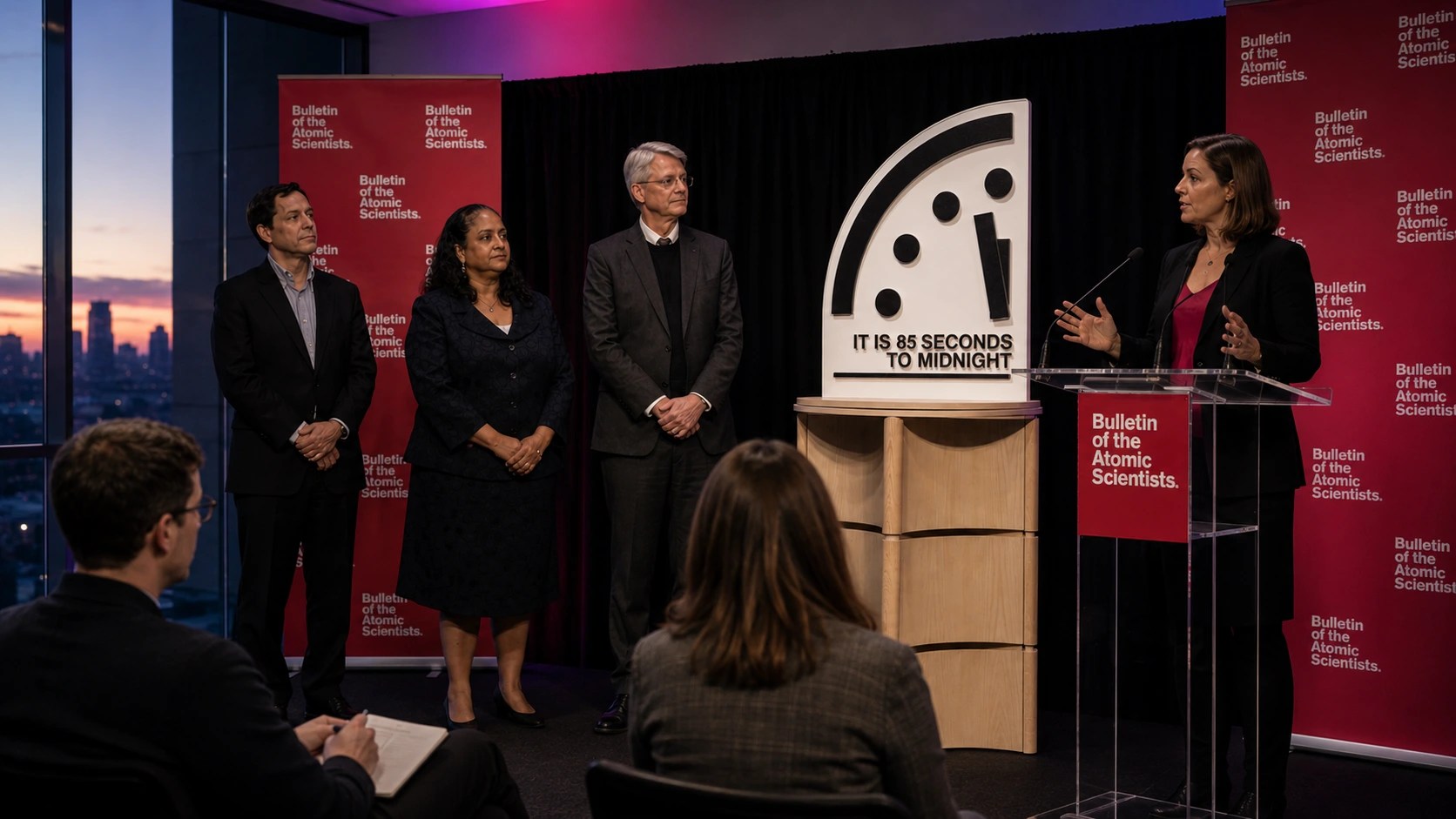

We help the Bulletin of the Atomic Scientists keep its WordPress site secure, stable, and ready for major global attention.
When the world’s most famous clock moves, the website of the Bulletin of the Atomic Scientists needs its website to hold steady.
Known globally for the Doomsday Clock, the Bulletin is a nonprofit science and global security organization that publishes expert journalism and analysis on nuclear risk, climate change, disruptive technologies, biosecurity, and other threats to human civilization. Each January, when the organization announces the Clock’s new time, global attention turns to its website.
That visibility brings both opportunity and risk. The Bulletin’s site is frequently targeted by coordinated international attack traffic, with pressure rising around major editorial moments. Before partnering with Fueled (formerly 10up), the site had experienced instability during these critical windows, including crashes and performance issues during past Doomsday Clock announcements.
Fueled supports the Bulletin through SiteWatch, our WordPress site maintenance offering for organizations that need expert oversight, proactive security, and responsive support after launch. For the Bulletin, SiteWatch creates a dependable support model for its highest-visibility moments, combining round-the-clock monitoring, emergency response, ongoing WordPress maintenance, and monthly development hours for focused improvements like audio articles.
SiteWatch Plus for a high-stakes digital publishing environment
Fueled’s initial work included stabilizing the Bulletin’s platform, migrating the site from a self-hosted AWS environment to Pagely, and remediating legacy code and configuration issues so the site was ready for ongoing SiteWatch support.
With the foundation stabilized, the engagement moved into ongoing SiteWatch Plus support, giving the Bulletin a predictable way to manage day-to-day maintenance, high-pressure publishing moments, and focused site improvements:
- 24/7 site monitoring and emergency response
- Monthly WordPress core and plugin updates
- Security monitoring and vulnerability review
- Coordination with hosting and infrastructure partners
- Ongoing performance and caching support
- Eight hours of developer time each month for site changes, support requests, and focused improvements that require WordPress expertise
For the Bulletin, routine maintenance still requires expert judgment. WordPress core and plugin updates can introduce conflicts, older code can behave unpredictably as the ecosystem evolves, and vulnerabilities need to be reviewed in the context of the site’s actual configuration. SiteWatch pairs practical maintenance services with the depth of Fueled’s expertise, whose work spans enterprise integrations, major publishing platforms, and high-profile public-sector websites. Day-to-day support comes from engineers who understand publishing workflows, infrastructure partners, traffic patterns, and the security risks facing a site that draws global attention.
That familiarity and expertise matters most around the Doomsday Clock announcement, the Bulletin’s highest-profile annual moment. Fueled supports the Bulletin with contingency planning and live-event coverage around the announcement. During the event window, the team monitors traffic and site health in real time, communicates status with the Bulletin, and coordinates with Pagely when hosting-level support is needed.
Since moving to SiteWatch, the Bulletin has avoided the recurring crashes and instability that previously affected Doomsday Clock announcements. When the stakes rise, the Bulletin has a partner already familiar with the environment, the vendors, and the response plan, giving its editorial and communications teams room to focus on the announcement, media response, and audience engagement while Fueled manages the digital platform behind the scenes.
Since moving to SiteWatch, the Bulletin has avoided the recurring crashes and instability that previously affected Doomsday Clock announcements.
Mitigating attacks with layered protection and fast response
Fueled continuously works with the Bulletin to reduce malicious traffic from reaching the site in the first place.
Fueled helped the Bulletin implement Cloudflare as a protective layer that identifies and block many suspicious requests before they reach the server. For a site that can receive thousands of disruptive requests per second during an attack, that layer helps preserve performance for legitimate readers.
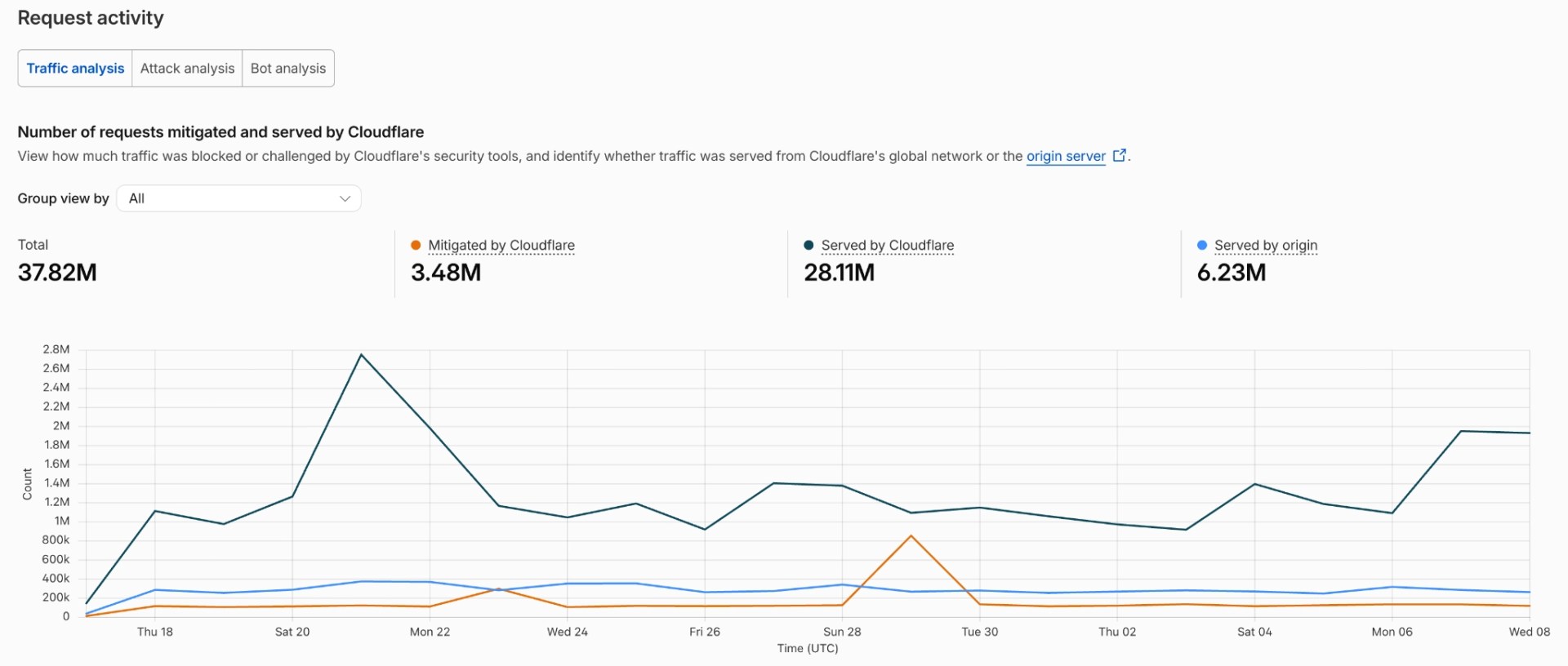
But automated systems cannot catch every pattern, especially when attack traffic changes or is designed to look legitimate. For example, the Bulletin once saw a 25,000% traffic increase associated with spam and attack activity. Fueled investigated the pattern, identified related traffic across multiple regions, and applied mitigation rules to help restore stability, preserving access for legitimate readers while the attack activity was addressed.
When the Bulletin experiences unusual traffic or site slowdowns, Fueled’s on-call engineers investigate quickly, review traffic patterns and logs, and implement new security rules and counter measures.
Expanding the reader experience with AI powered text-to-speech
SiteWatch Plus also gives the Bulletin a path for improving the site over time. Eight monthly development hours create space for focused enhancements that might otherwise sit outside a traditional maintenance plan or require a separate project.
The Bulletin’s new audio article experience shows how those hours can translate into meaningful product improvements. The Bulletin wanted to make its journalism available in a listenable format. The organization had a clear editorial principle: generative AI would not be used to directly create news content or produce media that could alter or confuse the meaning of its journalism. But AI could be used responsibly to support access, format flexibility, and audience experience.
The SiteWatch team built the feature using ClassifAI, the WordPress plugin developed by Fueled to bring AI into editorial workflows and site experiences. For the Bulletin, ClassifAI serves as the connective layer between WordPress and OpenAI’s text-to-speech capabilities, allowing the site to generate audio versions of articles without hardwiring the experience to a single AI provider.
ClassifAI’s implementation also gives the Bulletin space to evaluate alternative text-to-speech providers, in response to pricing or policy changes or alternative stronger models emerging in the future, without needing to rebuild the implementation from scratch.
Fueled solved several editorial and technical workflow challenges, including:
- Splitting long articles into smaller segments to work within text-to-speech limits
- Normalizing article content so bylines, footnotes, captions, and embeds were handled appropriately
- Preventing audio generation from slowing down staff publishing workflows
- Creating a workflow for longer articles that did not rely on real-time conversion during publishing
- Supporting an audio experience aligned with the Bulletin’s professional, authoritative tone
The result is a feature that gives the Bulletin another format for distributing long-form analysis, making its journalism easier to access for readers who prefer to listen or consume content while multitasking.
Operational confidence for a high-stakes mission
Since moving to SiteWatch, the Bulletin has avoided the recurring crashes and instability that previously affected Doomsday Clock announcements. Its journalism remains easier to access when audiences around the world are looking for context, analysis, and clarity.
For the Bulletin, SiteWatch turns maintenance into a source of operational confidence: the platform is actively protected, the team has support during high-pressure moments, and focused improvements can continue between major announcements.
With SiteWatch, the Bulletin has a maintenance partner built for everyday support, urgent response, and the moments when reliability matters most.