
The WordPress 6.9 release cycle marked a shift in how the CMS is preparing for the future of AI. Rather than shipping flashy front-end features, the release focused on the infrastructure that makes deeper, more intelligent capabilities possible. That groundwork included the Abilities API, the MCP adapter, and the WP AI Client, which together form the foundation of WordPress’s new AI stack.
To demonstrate how these tools can work in practice, the WordPress AI team, led by contributors from Automattic, Google, and Fueled, introduced an early working build of the AI Experiments plugin. Fueled led the design and development of version 0.1, defining its product direction and engineering implementation.
This plugin not only adds practical applications of AI into the WordPress UI, but models how AI ought to be integrated into WordPress going forward, leveraging these new and official building blocks.
A real-world showcase for creators and developers
The AI Experiments plugin serves two key purposes. First, it offers editorial features that solve common publishing problems in a simple and seamless way. Second, it provides developers and product teams with a working reference for how to build using new and official AI frameworks.
Each feature (or “experiment”) added to the plugin is meant to be used by content teams, but also studied by developers. For example, the plugin illustrates how to use the WP AI Client to call external LLMs, which removes the need for developers to include their own external service connection code within their plugins or other custom AI integrations. The experiments plugin also acts as a proving ground for the architecture itself, helping improve the very tools it’s built on.
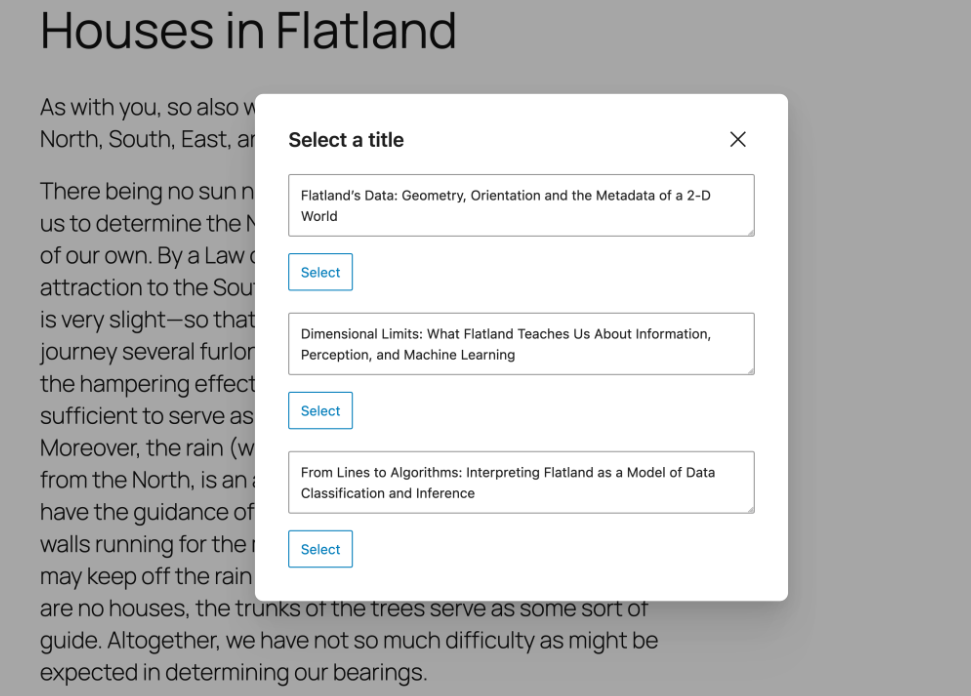
The plugin’s launch feature, title generation, integrates directly into the post title field in the block editor. With one click, editors are offered a set of suggested titles generated by AI from the content. These suggestions aim to improve clarity, tone, or engagement, depending on what the editor is looking for. It’s designed to be intuitive: no configuration, model selection, or extra UI. Just helpful suggestions, right where they’re needed.
More experiments are on the way. Features planned for for future releases include:
- Contextual tagging
- Content summarization
- Excerpt generation
- Alt text suggestions
- Image generation
These are the kinds of baseline capabilities we expect in a modern CMS like WordPress. Rather than having dozens of third-party plugins trying to solve the same problem, the larger goal is to offer a single, trusted approach that handles the basics well. That frees up the broader ecosystem — agencies, plugin developers, and enterprise teams — to focus on more innovative or specialized AI use cases, while minimizing end user confusion and complexity.
From ClassifAI to Core
Many of the ideas being explored in AI Experiments have roots in our work on ClassifAI, our open source plugin we released years before ChatGPT or generative AI became mainstream. From automatic tagging to image classification and smart 404 suggestions, ClassifAI has long served as a proving ground for what responsible, editorially useful AI can look like inside the CMS.
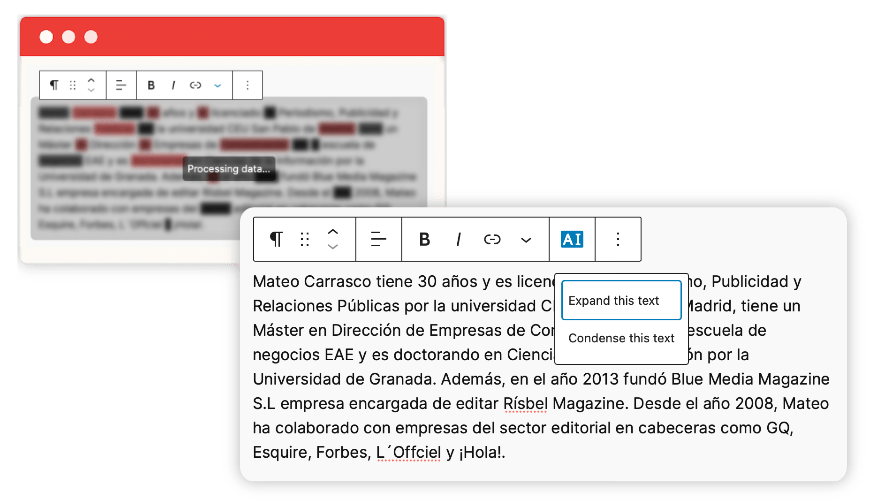
ClassifAI was an R&D project built to meet the evolving needs of our clients, and to help move WordPress forward as a modern platform. We’re now bringing that experience directly to the core AI effort, helping to shape shared standards and accelerate progress across the ecosystem.
Looking ahead, we expect ClassifAI to evolve in parallel with the official tools, incorporating shared infrastructure like the Abilities API and WP AI Client as they mature. Its focus will remain on more specialized applications of AI for enterprise use cases, such as the smart 404 handling and editorial rule sets we developed in partnership with Penske Media, going beyond the scope of what’s likely to be included in an official plugin.
Start using AI inside WordPress
The AI Experiments plugin is an early-stage project, aimed at both demonstrating and testing WordPress’s new AI capabilities. It’s a useful tool for developers and early adopters who want to see how these frameworks work in practice, or explore simple, no-setup enhancements like title suggestions.
For teams looking for a mature, production-ready solution with a richer feature set, ClassifAI remains the more complete option today. It’s stable, well-supported, and already in use across high-scale editorial environments.Want to explore what’s possible today, or contribute to what’s next? Check out the plugin, or get in touch to talk through your needs.