

Fueled and its 10up WordPress practice continues to shape how AI is applied inside WordPress, delivering production-ready add-on capabilities and playing a central role in the platform’s emerging native AI framework.
- ClassifAI: Fueled’s AI plugin for WordPress, supporting real-world editorial and publishing workflows since 2018.
- AI Experiments: the official WordPress reference plugin, where Fueled leaders are helping define how AI integrates natively into the CMS.
In their latest releases, ClassifAI and AI Experiments continue to raise the bar for how AI is integrated into WordPress.
ClassifAI: Mature AI capabilities designed for editorial and content teams
Since its launch in 2018, ClassifAI has been built around the realities of modern content operations. It started with capabilities like automatic tagging, image classification, and smarter content connections, and it’s continued to evolve as AI capabilities expanded. Many of the ideas now being explored in the AI Experiments effort trace back to lessons learned while building ClassifAI, years before generative AI became mainstream.
Recent releases reflect the pressures modern publishing teams face: producing more content without sacrificing quality, improving discovery and recirculation across deep archives, and adopting AI in ways that align with privacy, governance, and operational control.
Content generation for editorial workflows
ClassifAI’s content generation features bring AI-assisted writing directly into WordPress, helping editorial teams move faster on the parts of publishing that slow production down:
- Draft and refine faster: accelerate first-pass copy and quick rewrites without leaving the editor.
- Reduce repetitive work: support tasks like short summaries, alternate phrasing, or structure suggestions that otherwise get repeated across teams and channels.
- Keep control in the workflow: generation happens where content is reviewed, edited, and approved, making it easier to apply editorial standards and governance.
For content creators, the impact is practical. Fewer context switches, faster turnaround, and more consistency when multiple teams are producing content at volume.
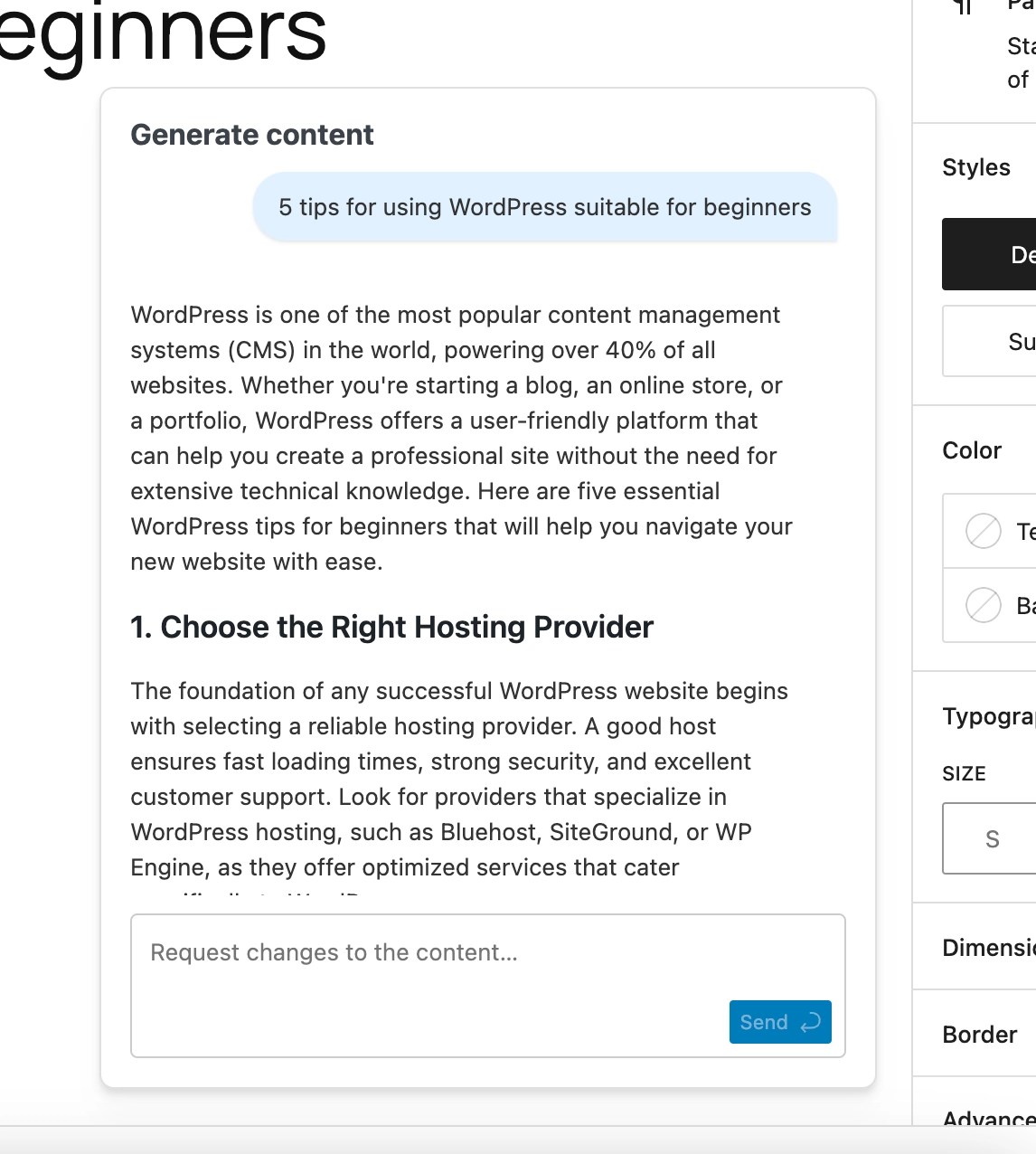
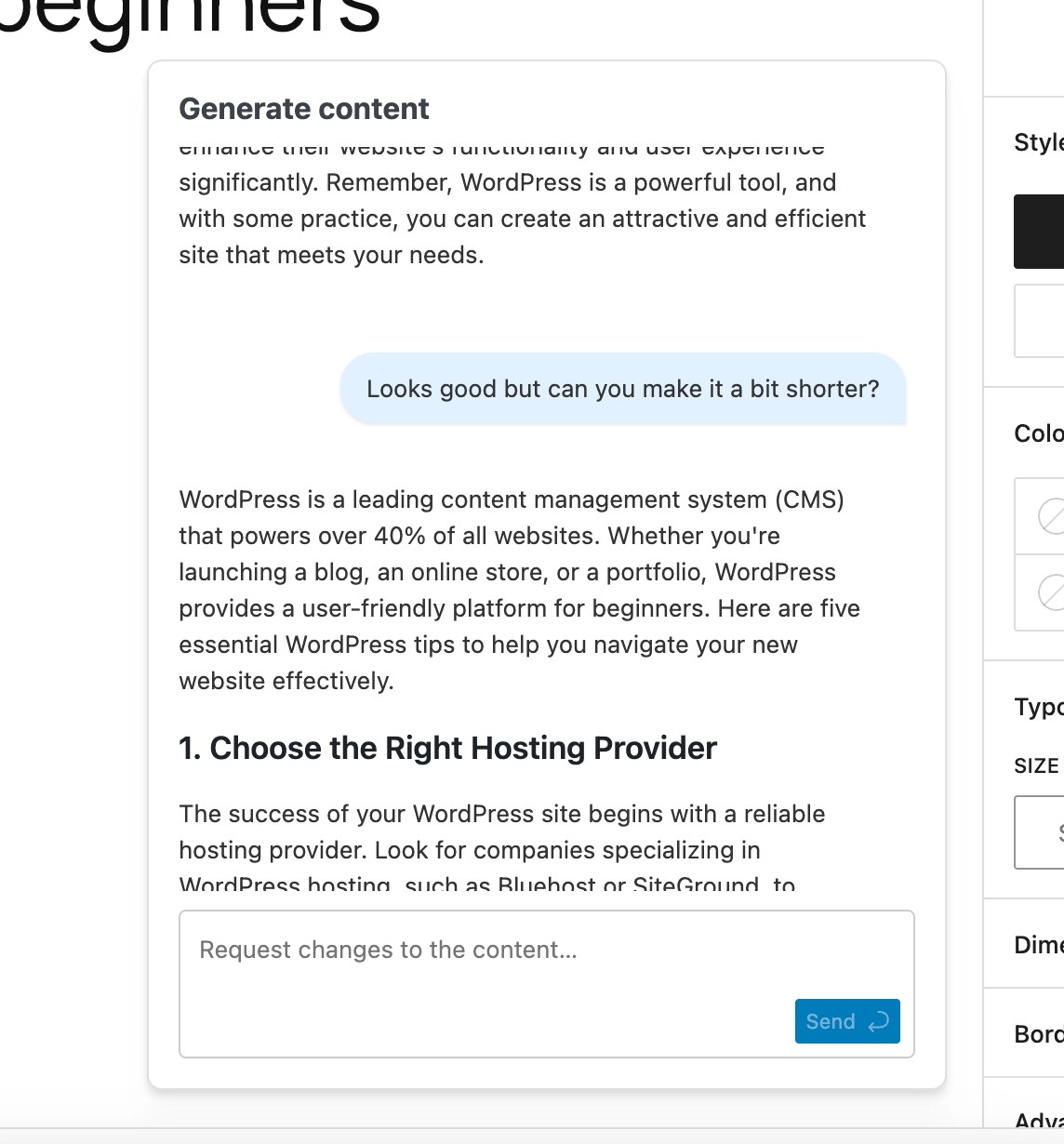
Just as importantly, generation in ClassifAI pairs naturally with what the plugin has long done well: classification and metadata automation. When WordPress can both help create content and help structure it (through enrichment signals like taxonomy and other organization tools), teams spend less time on manual cleanup and more time on crafting quality content.
Enhanced content recommendations
ClassifAI’s recommendation features surface genuinely relevant related content—supporting editors assembling story packages and powering recirculation modules that keep audiences engaged.
Rather than relying on categories, tags, or manual curation, ClassifAI uses embedding-based matching to identify content related by meaning, not just shared taxonomy. In a large archive, that makes a real difference:
- Better related links and modules, even when taxonomy is inconsistent or content spans multiple beats.
- Stronger recirculation across deep libraries, without requiring editors to hand-curate every connection.
More useful editorial suggestions, because recommendations can reflect topic similarity, not just shared tags.
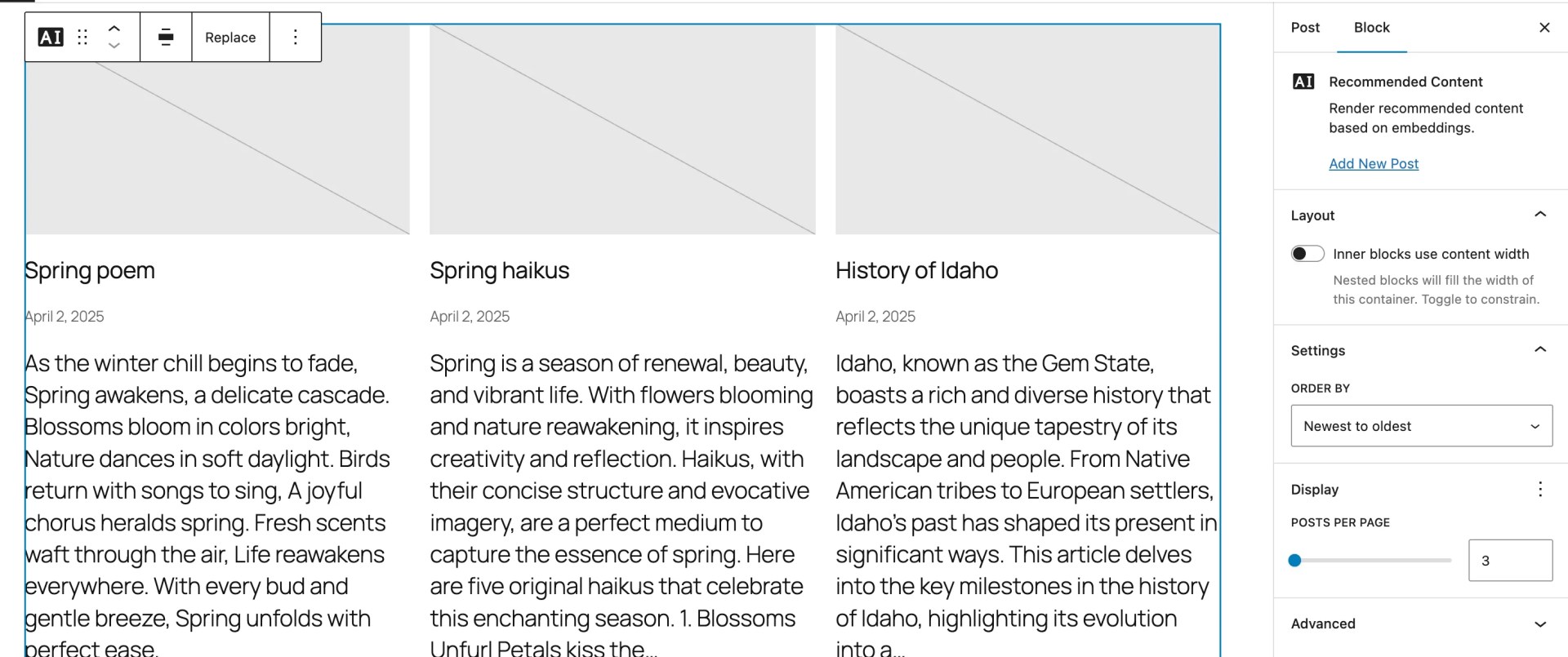
The result is a more helpful WordPress workflow. Editors get smarter suggestions when building pages, and publishers can improve discovery and internal linking without adding ongoing operational overhead.
Expanded model and platform support, including local and open-source options
Enterprise adoption of AI does not follow a uniform path; each organization operates within its own approved providers, security requirements, and infrastructure constraints. For instance, while some organizations prioritize speed and convenience with hosted providers, others require tighter control over privacy, cost predictability, or infrastructure strategy through self-hosted or local options.
A notable example is support for local and open-source models like Ollama, which can now power features such as the Smart 404 recommendation experience. This flexibility allows organizations to adopt AI-powered recommendations without requiring data to flow through a single hosted provider.
WooCommerce features, robots.txt controls
A few smaller updates include:
WooCommerce product-based title and excerpt generation marks ClassifAI’s first expansion into commerce-oriented workflows. It signals how applied AI can extend beyond editorial publishing into support for product catalogs, merchandising workflows, and commerce-adjacent content operations.
Simple robots.txt controls, providing a clearer path for publishers who want to limit access from common AI scraping bots and better express crawling preferences as governance concerns grow.
How ClassifAI fits into what’s next
ClassifAI began as an independent R&D initiative built to serve evolving client needs and move WordPress forward as a modern platform. Going forward, it will operate in conjunction with and build upon the official WordPress AI initiative.
ClassifAI is expected to evolve in parallel with AI Experiments, incorporating shared infrastructure like the Abilities API and WP AI Client as they mature. Its focus will remain on specialized, enterprise-oriented applications that are unlikely to land in an official reference plugin, including advanced editorial workflows like the smart 404 handling and rule sets developed in partnership with Penske Media.
AI Experiments: A reference model for how AI can integrate into WordPress
AI Experiments is an official project of the WordPress AI Team, chartered to explore and demonstrate how AI can integrate natively into WordPress through reference implementations that can be tested and serve as a model across the ecosystem.
Fueled has played a central role from the project’s inception, moving it from early concepts into practical, testable implementations that reflect real CMS workflows. That leadership is part of a broader commitment to building WordPress itself, and to shaping shared standards that benefit publishers and product teams across the platform.
Expanding experiments beyond title generation
The initial AI Experiments release introduced title generation as a lightweight example of AI embedded directly into the editorial workflow. Since then, the project has expanded into a broader set of reference implementations that demonstrate how AI can enhance core publishing tasks within WordPress.
Content summarization, providing concise summaries that can be reused across experiences and channels.
Featured image generation, enabling teams to explore early approaches to visual ideation inside WordPress.
Alt text generation, supporting accessibility goals while reducing repetitive editorial overhead.
Excerpt generation, supporting faster creation of summaries for archives, newsletters, and distribution workflows.
Collectively, these experiments provide working examples of how AI can integrate into WordPress in editorially useful, workflow-aware, and extensible ways.
And it’s worth reiterating the intent: the AI Experiments plugin is an early-stage project, aimed at both demonstrating and testing WordPress’s new AI capabilities. It’s especially useful for developers and early adopters who want to see how these frameworks work in practice, or explore simple, no-setup enhancements like title suggestions.
Putting WordPress AI into practice
AI Experiments offers a clear window into how WordPress AI is being shaped, providing reference implementations that help establish patterns the ecosystem can build on.
ClassifAI represents the applied counterpart: a production-ready plugin with a broader feature set, proven in demanding content environments where reliability, control, and scalability matter.
Our work bringing AI into WordPress and digital content extends beyond editorial workflows. Recent highlights include AI-enabled improvements to site search through ElasticPress.io that enhance discovery across large content libraries.If your organization is ready to put AI into its content workflows, or your team is developing AI-powered products or integrations for WordPress and needs an experienced partner, reach out.