

A digital product can hit every internal milestone and still miss the market.
The team can ship on time. The interface can be polished. The roadmap can be approved. The launch can look successful from the inside.
But the real measure of product success is whether people choose it and keep using it. Whether they use it without being pushed. Whether it becomes their preferred way to get something done.
Strong product teams build around that reality. They align early on the problem, test for real demand, define success clearly, and make scope decisions around business value, not momentum.
In our work with product teams, four habits consistently separate products that move forward internally from products people actually choose.
1. They start with the problem, not the feature list
A feature list can create a comforting sense of progress. It gives teams something tangible to scope, design, estimate, and build. But effective teams begin one step earlier, with a clear understanding of the problem the product is meant to solve
In early product conversations, I listen for where the energy goes: toward the feature list, or toward the problem the product needs to solve. When the conversation stays at the level of features, internal assumptions can start to drive the roadmap: what the business wants to launch, what competitors have, what stakeholders have already promised, or what feels impressive in a roadmap review. Effective teams start with sharper, more uncomfortable questions:
- What problem is this product solving?
- For whom is that problem urgent?
- What existing behavior or workaround is the product trying to improve?
- What would make the experience meaningfully better than the current alternative?
- What evidence supports that this is the right problem to solve now?
That kind of clarity gives teams room to challenge the initial brief and find a better path.
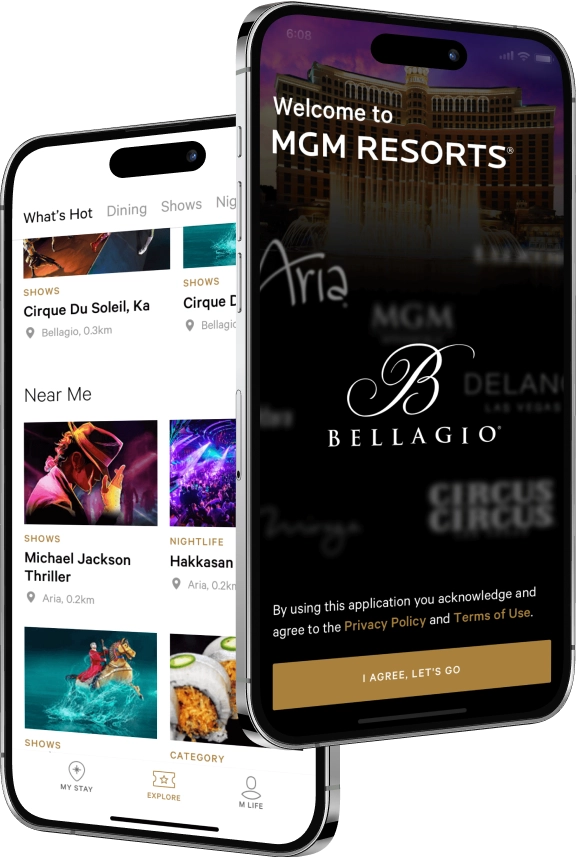
MGM Resorts initially brought Fueled in to help build a digital booking experience. It would have been easy to define the assignment as a better way to search dates, compare rooms, and complete a reservation. But effective teams look at the job a customer is trying to complete (the larger underlying problem), not only the screen where the brief begins. For a hotel guest, booking is part of a larger journey: choosing a stay, arriving on property, and getting into the room with as little friction as possible.
When our team looked at that broader journey, check-in emerged as the bigger obstacle. Long front desk lines were adding frustration after the guest had already made the booking, at the moment the resort experience needed to deliver on its promise. That reframed the product opportunity, leading to a mobile key experience designed to reduce front desk friction and make getting to the room feel more seamless.
The brief should be treated as the beginning of discovery, not the final definition of the work. Effective teams stay attached to the problem, not the first version of the solution. A feature can be cut, a workflow can be simplified, and a roadmap can be reordered when the evidence points to a better way to create value.
2. They design for reasons to return, not just ease of use
Usability is a baseline. A product should be easy to understand, easy to navigate, and easy to complete a task in. But ease of use does not guarantee that anyone will come back.
Customer-led teams look for the behaviors behind the transaction: what customers anticipate, compare, save, personalize, share, or return to without being asked. Those behaviors reveal where a product can become more than a functional channel.
For brands with highly engaged customers, the product opportunity is often hiding in what those customers already do voluntarily.
FIGS is a strong example. The brand has built an unusually loyal following among healthcare professionals. Customers do not simply buy scrubs as a commodity purchase. Many follow the brand closely, watch for new color drops, and treat their workwear as one of the few areas where they can express personal style in a highly constrained professional environment.
That meant the mobile app had a job beyond checkout. A functional shopping experience could help customers browse, add to cart, and buy. But for FIGS, the larger opportunity was to design a mobile experience around existing customer rituals: anticipating launches, comparing colors, and planning purchases around moments of brand excitement.
Our team helped launch a mobile app that supported core commerce needs while giving customers more reasons to return. Features like a color comparator and launch countdown templates made the experience more connected to how FIGS customers already engaged with the brand.
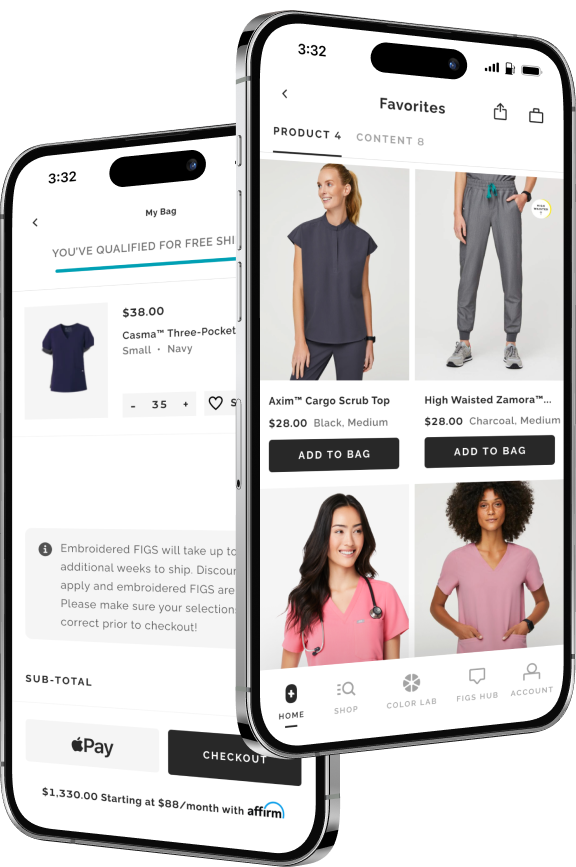
For FIGS, the opportunity was to make mobile commerce a more valuable owned channel: one that supported purchases while giving loyal customers more reasons to return between transactions.
For product leaders, the strategic question is not only, “Can people use this?” It is also:
- Do they care enough to come back?
- Does the product reflect what they already value about the brand?
- Does it create a reason to engage beyond the transaction?
- Does it deepen loyalty, community, or habit?
When the answer is yes, the product has a reason to exist beyond the transaction. It gives customers a reason to return, and gives the brand a stronger owned channel for loyalty, engagement, and commerce.
3. They test for real demand, not polite approval
Polite feedback can keep a weak product idea alive for too long. In early concept testing, phrases like “nice idea,” “interesting,” or “I would probably try that” can sound encouraging. But approval is easy to give when nothing is being asked of the customer.
Outcome-focused teams look for a stronger signal: energy. Not performative excitement, but the kind of specific response that suggests the product has found a real need. People describe the exact situation where they would use it. They compare it to an existing frustration. They ask when it will be available. They challenge parts of the concept because they are already imagining how it would fit into their lives.
This is where research becomes more than a validation exercise. Interviews, usability sessions, concept tests, diary studies, and facilitated workshops can reveal whether a product idea creates urgency, relief, excitement, skepticism, or indifference. Each reaction tells the team something useful.
Indifference is often the most important signal. It is also the easiest to ignore.
A customer who is confused may still care. A customer who disagrees may still be engaged. A customer who politely understands the product but has no real reaction is telling the team something critical: the idea may not be connected to a meaningful enough need.
Outcome-focused teams use research to understand where authentic demand already exists, then shape the product around it. They ask:
- What are people already trying to accomplish?
- Where are they frustrated with the current path?
- What workarounds have they created?
- What would make them choose a new option over the one they already use?
- Which parts of the concept create a strong reaction, and which parts fade into the background?
The best product ideas tend to produce signal before they produce scale. Teams that know how to read that signal are better equipped to invest in products people will actually choose.
4. They define success before scope
Without a clear definition of success, every feature can sound important.
Marketing may care about acquisition. Product may care about engagement. Operations may care about efficiency. Leadership may care about retention, revenue, or market perception. All of those goals can be valid. The problem begins when they are treated as interchangeable.
That kind of ambiguity makes product decisions harder than they need to be. The roadmap expands. Priorities shift. Tradeoffs become political instead of strategic. Teams end up relying on proxy metrics or broad aspirations because the real business outcome was never defined with enough precision.
At Fueled, this is one reason we use a Northstar workshop early in our product strategy process. The workshop aligns stakeholders around the most important metric the product needs to influence. Other metrics still matter, but the team has a clear center of gravity for decision-making.
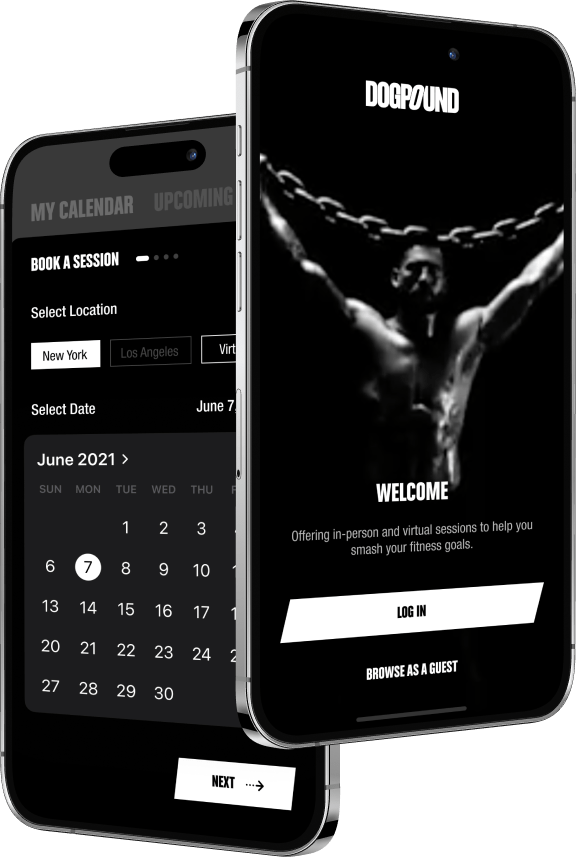
In our work with DOGPOUND, the boutique fitness brand, the Northstar metric centered the MVP around retention. The question was not simply what a fitness app could include. It was whether the product could help members and clients keep training with DOGPOUND over time.
With retention as the filter, the MVP could be scoped around the behaviors most likely to support that outcome, rather than expanding into every feature a fitness app might theoretically include.
That focus helped guide decisions around what belonged in the initial product, what could wait, and what would risk distracting the team from the outcome that mattered most.
A strong Northstar metric helps product teams answer questions like:
- Which features directly support the business outcome?
- Which ideas are useful but not essential right now?
- What should be measured immediately after launch?
- What tradeoffs are worth making in the MVP?
- How will the team know whether the product is working?
This is where strategy becomes practical. A Northstar metric gives teams a decision-making tool they can use when scope gets noisy, priorities compete, and new ideas enter the conversation.
Build products people choose, not just products teams can ship
A well-built digital product can still miss when the team gets so focused on delivery that it loses sight of the problem it set out to solve and the demand it still has to earn.
The teams that deliver results know when to stop, reframe, and pressure-test the work before the roadmap hardens. They clarify the underlying problem. They look for reasons customers will return. They test for real demand, not polite approval. They define success in business terms before scope takes over.
At Fueled, we apply these habits to help product leaders decide what to build, what to cut, what to rethink, and what to measure, so the final product has a better chance of becoming something people actually use. If your team is trying to figure out what to build, and what not to build, our team can help turn product and growth ambition into a clearer, more valuable path forward. Reach out.