

In the early days of digital product design, it was common to separate research into a distinct phase: gather insights, package them into a deck, and move on to wireframes. But in today’s fast-moving product cycles, that model doesn’t always hold up, and the problems we’re solving are often more complex.
At Fueled, we’ve learned that the most effective research isn’t siloed at the start of a project. It’s embedded into every phase of project delivery and iteration. My new white paper, Beyond Handoffs: Making Research a Core Design Capability, explores the shift from traditional research phases to a continuous model where insights are delivered throughout.
Research That Moves With the Work
Traditional UX research phases often follow a waterfall model: research happens, then design begins, then engineering. But that structure assumes that everything we need to know to deliver the optimal outcome can be discovered before design even starts. In practice, that’s rarely the case.
Instead, our team has adopted a Just Enough Research approach, inspired by Erika Hall’s book of the same name: do just enough discovery to inform the first design sprint, then continue to test, iterate, and refine as the product takes shape. It’s faster, more responsive, and leads to better outcomes.
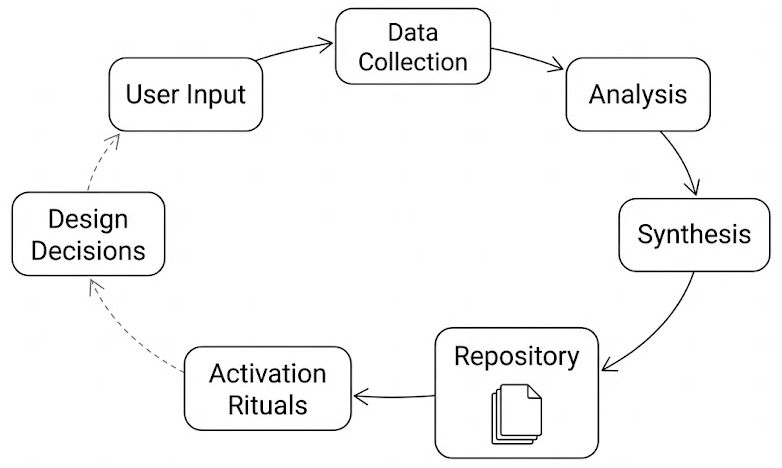
In our most effective engagements, user research and design are paired from day one, working in tandem through iterative cycles and experimentation. Daily insight drops from research inform ongoing creative exploration, allowing the team to evolve the product without delays or rework.
For example, in a recent project for a nationwide insurance agency, early data showed that visitors were abandoning the flow during the initial quote. Rather than spend weeks upfront hypothesizing why in the abstract, we embedded research into the sprint cycle focused on onboarding, alongside design and engineering. We did “just enough” upfront research, via early interviews, to uncover that asking for personal information, like phone number or home address, too early in the flow was a turn-off.
Designers proposed an update with reordered questions, leading with more innocuous prompts like ZIP code and vehicle type. Engineering made the change, while our researchers studied the real world impact.
Even micro-copy mattered. Phrases like “coverage exclusions may apply” were found to create confusion and erode trust. In testing proposed design changes, customers responded far more positively to plainspoken language like “this policy doesn’t cover flood damage” — a change that made them feel confident and informed.
These changes emerged not from a massive preliminary research phase, but from small, embedded touchpoints throughout the project.
Integration Doesn’t Mean Inflation
One misconception we often face is that continuous research means more time or budget. But in practice, it means redistributing the same time and resources more effectively. Rather than burning through 100 hours in a single upfront phase, we distribute those hours across the life of the project. We test hypotheses in the moment, in context, and in a way that actually de-risks the work and is more efficient.
This approach not only improves velocity, it also empowers teams to make smarter design decisions in the moment, not just in retrospect. It means fewer expensive course-corrections down the line, and more confidence at every review.
Knowing When to Go Deep
There are still moments where a more traditional discovery phase makes sense. Some clients, like government agencies or regulated industries, need an extensive upfront understanding of their ecosystem before design can begin.
In one recent project with a state labor department, our team led a six-month research engagement to help the client understand how to serve a complex user base, spanning multiple languages, access levels, and legal requirements.
These deep dives remain valuable. But even in those contexts, we look for ways to test interactions as the design takes shape, whether it’s validating the path to an application or improving the clarity of eligibility requirements. The point is not to abandon early research entirely; it’s to stop treating research practices as something that stops and starts between building phases.
Making Research a Core Design Capability
As Fueled’s Senior Director of Research and Design, bringing these disciplines closer together has become a central focus. We’re building a model where insight and intuition move in lockstep, sprint by sprint. The result is a design practice that moves faster, builds smarter, and connects more meaningfully with the people our clients serve.
Our new white paper, Beyond Handoffs: Making Research a Core Design Capability, offers a blueprint for UX and design leaders looking to bring this mindset to their teams. From rituals to research operations, it details how we make this approach work across engagements large and small.
If you’re looking for a partner who builds digital products grounded in evidence, designed to perform, and built to resonate, get in touch.