


In 2026, leaders in news media and publishing are navigating a fragmented, fast-evolving digital economy. The programmatic ad revenue model, built on fewer privacy controls and traditional Google search traffic, that buoyed online media in the last decade no longer sustains growth. Generative AI is reshaping how audiences find and engage with “knowledge” content, as part of a larger shift from a website “product” to an ecosystem of channels, formats, and platforms built to drive engagement and monetization across the stack.
To help publishers adapt and lead through this change, Fueled and WordPress VIP have released a new white paper: From Pageviews to Product: How Digital Publishers and News Media Thrive as Traffic, Trust, and Revenue Rewire in 2026.
Drawing on our vast experience working with a wide range of publishers — from global brands like The New York Times, Rolling Stone, and POLITICO, to regional and mission-driven newsrooms like CalMatters — this paper lays out six macro trends shaping the future of digital publishing, and provides actionable strategies for navigating them.
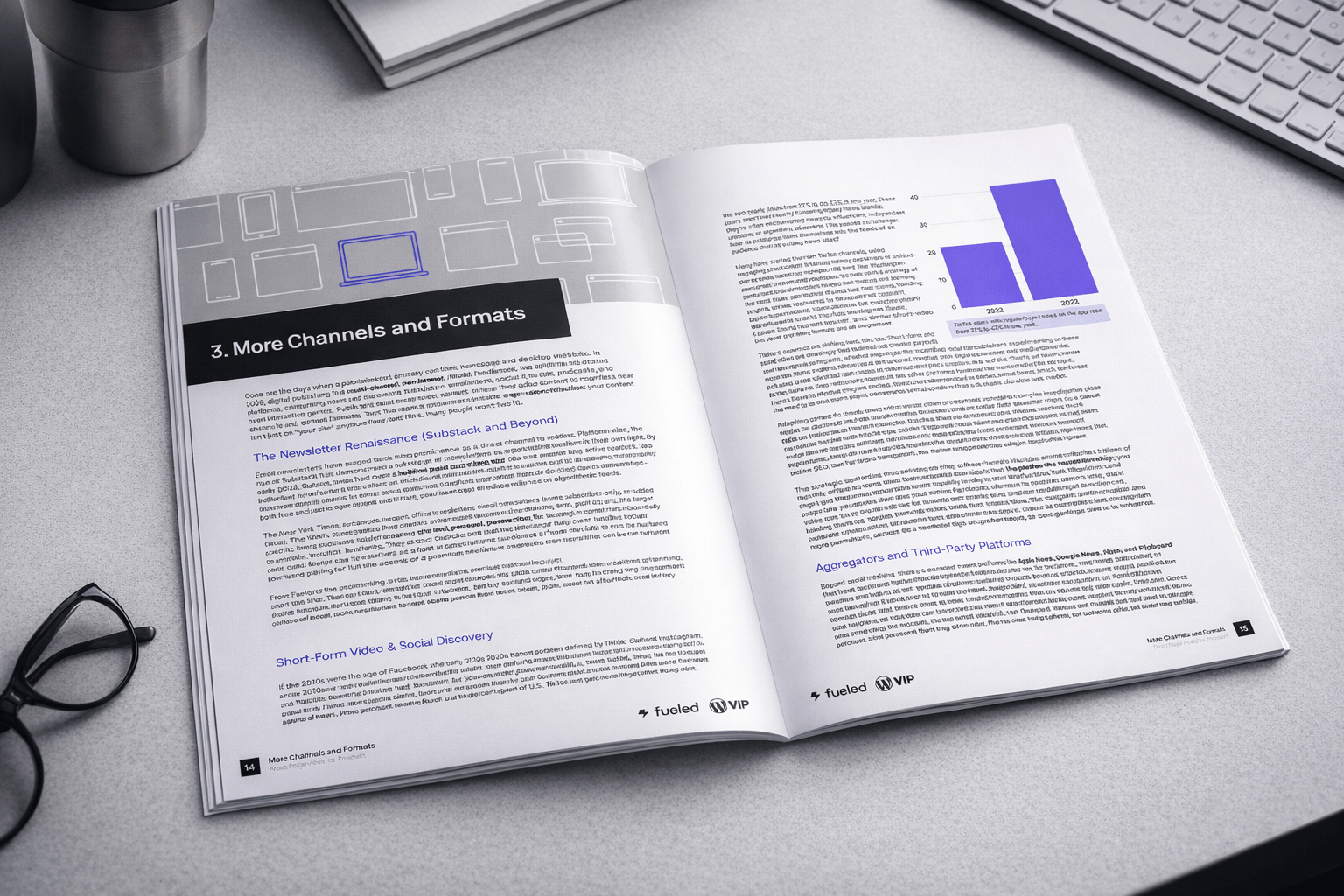
Six Macro Trends Reshaping Publishing in 2026
1. Monetization Models Are Fragmenting
Publishers are reducing reliance on traditional ad models and building revenue portfolios that increasingly elevate subscriptions, affiliate commerce, memberships, events, and even content licensing for AI. The paper explores how leading publishers are using first-party data and flexible monetization tech stacks to rebalance their revenue portfolios, and why the future belongs to publishers who can orchestrate multiple revenue streams effectively.
2. Generative AI Is Transformative
AI is a force reshaping creation, personalization, and discovery, from AI-generated headlines and summaries to “generative engine optimization” (GEO) strategies for visibility in AI-powered search. Discovery is increasingly fragmented, and referral clicks are harder to come by. The paper digs into how AI can increase efficiency while preserving editorial standards, and what it means for referral traffic, audience trust, and content value.
3. More Channels, More Formats
Newsletters, TikTok, YouTube Shorts, podcasts, aggregators, and AI-native feeds have become essential distribution channels. Publishers are also investing in interactive formats like quizzes, polls, games, and calculators to drive engagement and repeat visits. The paper explores how teams are developing platform-native content strategies and CMS infrastructure that support multichannel delivery and scalable content repurposing, to meet audiences where they are and diversify revenue streams.

4. From Reach to Depth
Publishers are investing in first-party relationships: newsletter subscribers, app users, and known audiences they can retain and personalize experiences for. This section outlines strategies for lifecycle marketing, personalization, and community building that deepen engagement and increase retention.
5. Legal and Regulatory Complexity
Privacy laws, accessibility requirements, AI usage rights, and content authenticity standards are now foundational to operating in digital publishing. Beyond risk management, many of these compliance areas overlap with more “spiritual” issues around consumer trust and credibility. The paper outlines the most pressing regulatory shifts and how forward-looking teams are designing compliance into their platforms and workflows from the ground up.
6. Infrastructure Modernization
To keep pace with new channels, content demands, AI capability, and regulatory pressures, publishers are rebuilding their digital foundations. Composable CMS architectures, API-first delivery, and integrated AI tooling are becoming standard. The cost to keep pace with bespoke in-house platforms is higher than ever. Fueled and WordPress VIP bring firsthand perspectives on what modernization looks like in practice, from rethinking editorial workflows and personalization systems to enabling scalable governance around AI and compliance.

Translating Trends Into Action
From Pageviews to Product distills insights from our work with publishers at every scale: from the most recognizable names in global media to emerging digital outlets and regional newsrooms. It reflects how modern publishing organizations are evolving strategically, operationally, and technically to navigate a landscape defined by rapid change.
More than a trends report, this white paper outlines concrete action plans for publishing stakeholders, from editorial to product to revenue, looking to move forward. Each section pairs strategic insight with practical next steps, designed to help teams prioritize, pilot, and build with confidence.
Fueled helps media organizations evaluate their current state and identify the highest-impact opportunities across monetization, content workflows, AI readiness, and platform infrastructure. Whether the focus is near-term optimization, longer-term roadmap, or simply capital investment in CMS and technology, our teams help clarify priorities and build toward what’s next. Let’s talk.