
Fueled redesigned Viking’s app and website to make preparing for a cruise and managing life on board feel like one consistent experience, with personalized screens that anticipated what guests would need at each stage of their trip.
Viking Cruises operates more than 100 ships offering river, ocean, and expedition voyages around the world. The company generated $6.5 billion in revenue in 2025.
For a Viking guest, reserving a cruise kicks off a new set of planning activities. Flights and transfers need to be arranged. Travel documents have to be completed. Excursions, restaurant reservations, and onboard activities compete for the same finite days.
At the start of our engagement, guests managed those plans across a pre-cruise website and an onboard app. Similar tasks looked and worked differently across the two, and there was a period around departure when guests could not manage their cruise plans through either. Viking partnered with Fueled to make planning and managing a cruise easier, with a digital experience that matched its premium service and adapted to guests’ needs throughout the trip. That included a complete mobile experience for guests who preferred to use the website as well as those using the app.
Designing around every stage of the voyage
We designed the app and website to adapt to each stage of a guest’s journey. The screens would change as guests prepared for their trip and then began their cruise.
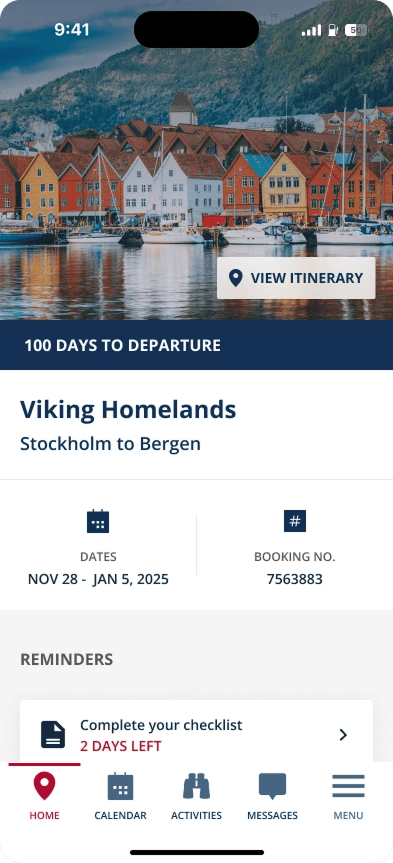
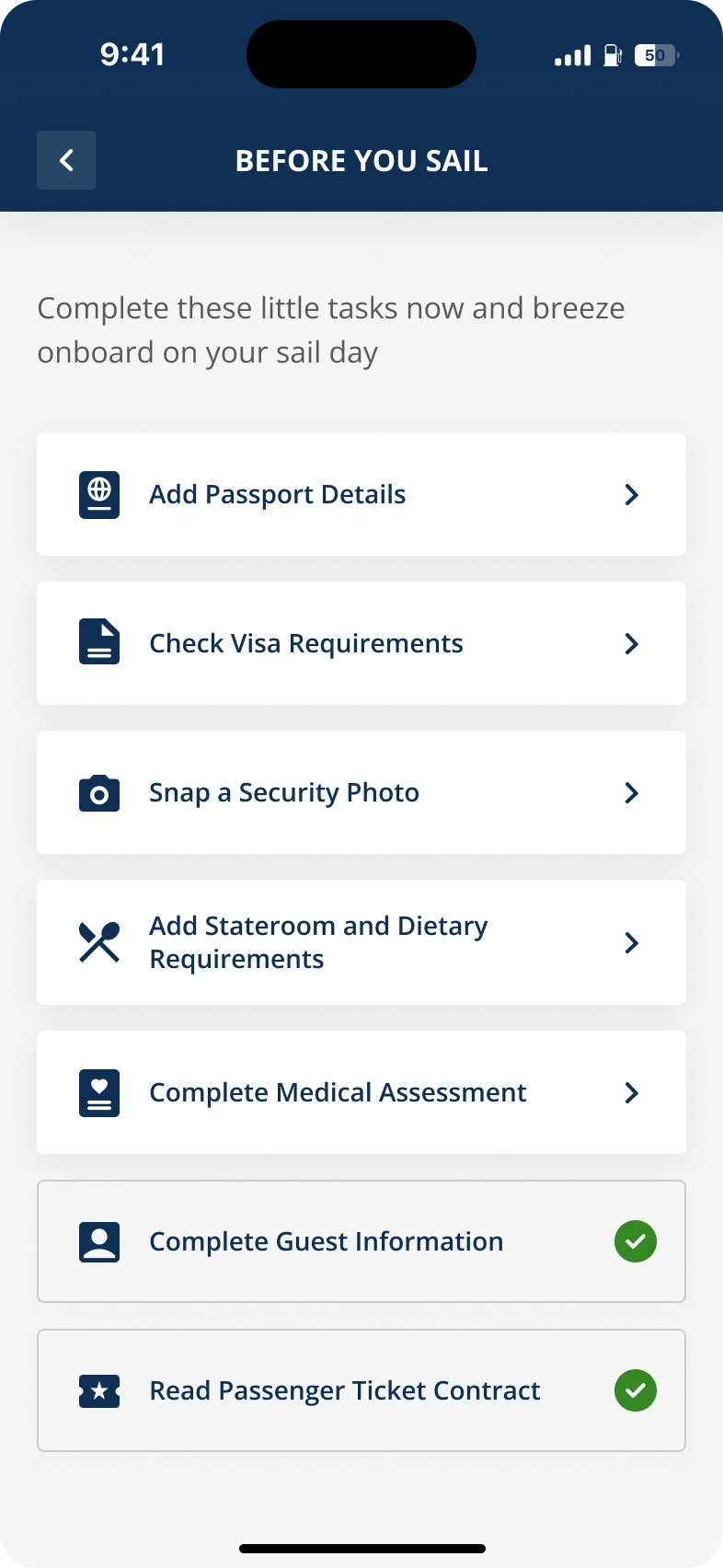
Before departure, we emphasized the travel checklist and reminders about when guests could reserve dining and excursions.
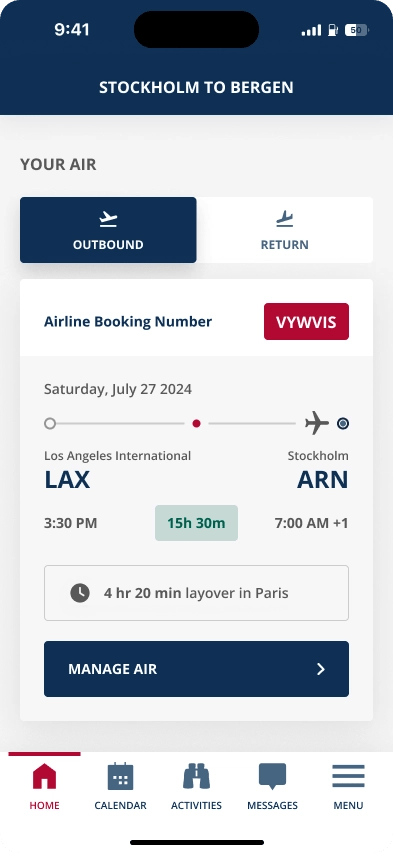
Traveling to the cruise, guests would see flight details and cruise boarding passes more prominently on the screen. We included flight information only for guests who had arranged their air travel through Viking.
Once guests were on board, we shifted the emphasis to their daily plans and available activities.
In port, the home screen showed local weather, when guests needed to be back on board, and a link to directions back to the ship.
Building on Viking’s visual identity
Viking’s visual identity was calm, refined, and intentionally minimal. In a visual workshop with its team, we explored how natural colors, destination imagery, and subtle movement could carry that character into the app and website while making the experience feel more inviting.
For example, we saw an opportunity to bring more delight to the pre-departure home screen. We paired the practical checklist and reservation reminders with a countdown and an itinerary preview to build excitement for the places guests would visit while helping them get ready to sail.
Helping guests coordinate plans with a shared calendar
Cruise planning is not a solo activity. A dinner reservation may include a partner. An excursion can overlap with a spa appointment. One traveler’s decision can reshape the day for their companion.
We designed a shared calendar that combined the cruise itinerary, confirmed reservations, and traveling companions’ plans with events from Viking Daily, the ship’s daily program. Color coding distinguished activity types, while filters let guests focus on their own plans or those of their companion.
On larger screens, the website offered a choice between a detailed daily schedule and a wider view showing several days side by side. Colors and labels were consistent across the mobile app and website.
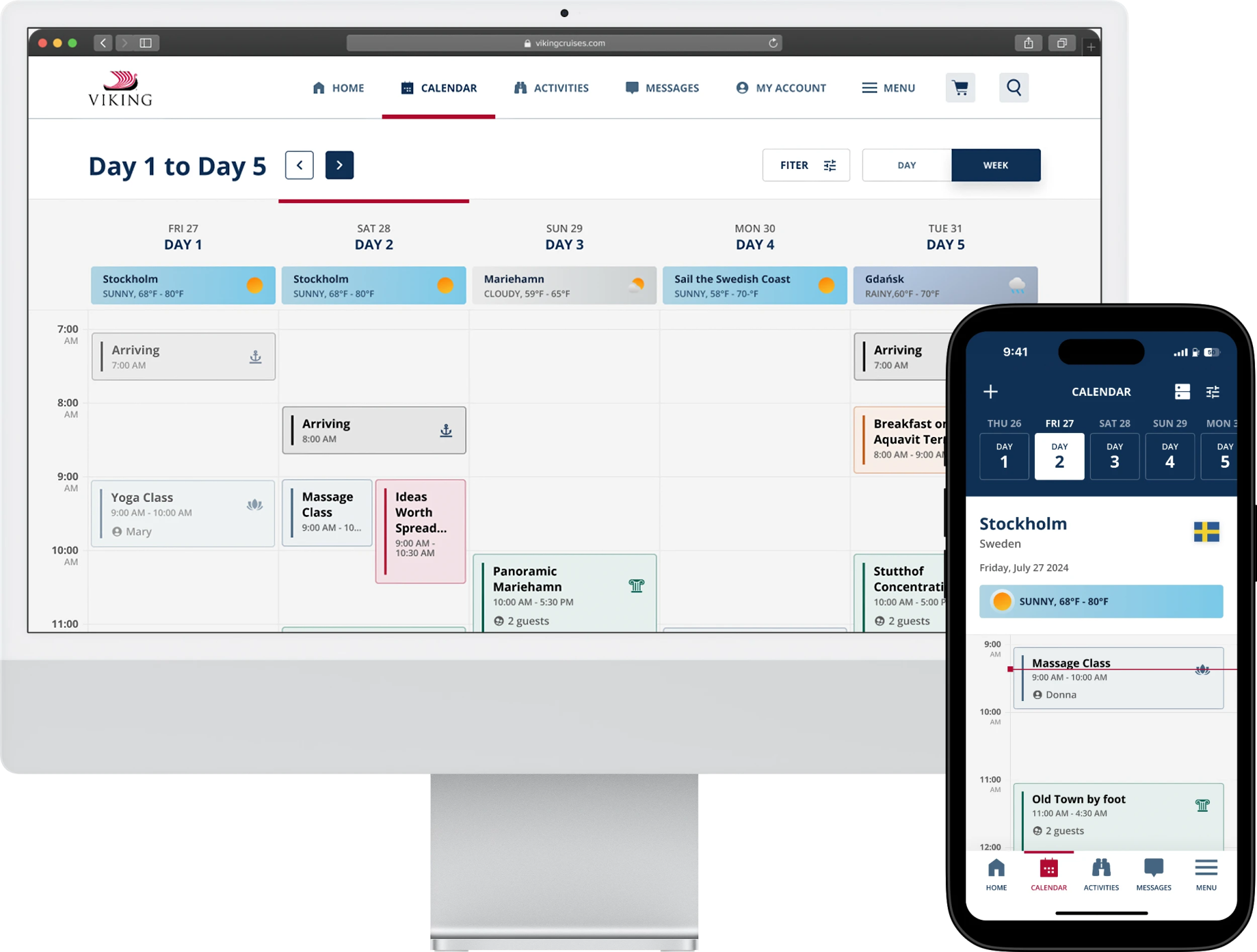
Viking’s team also wanted guests to discover activities that fit around their existing plans. We designed a calendar interface to highlight free time between reservations and suggest activities guests could add to their schedule.
Designing better dining and activity reservations
Dining, spa treatments, and shore excursions each came with different reservation requirements. For the new design, we wanted each to feel more like part of the same polished service, with familiar steps and layouts to help guests move confidently from one reservation to the next. We designed a consistent sequence for reviewing the experience, choosing guests and an available time, and confirming the reservation, adapting individual steps to each service’s requirements.
For dining, we also designed options for reserving a table for two or choosing a larger table. Guests could invite other travelers using their cruise booking number or opt to share a table of four or six with other guests.
Further, popular excursions often sold out quickly, with customer-service staff recording requests manually and no digital waiting list for guests. We designed a waiting-list option on the excursion page so guests could register their interest and be notified if a place opened up.
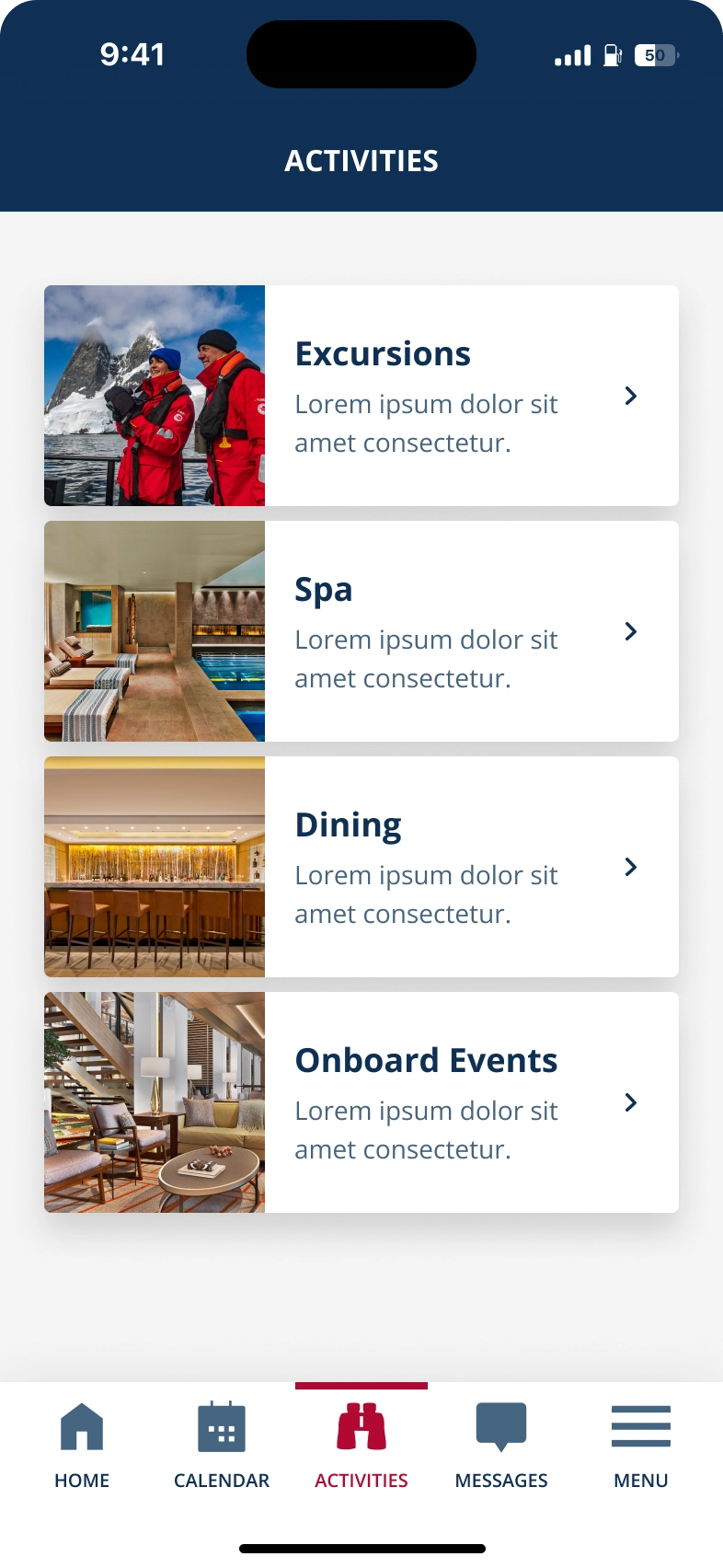
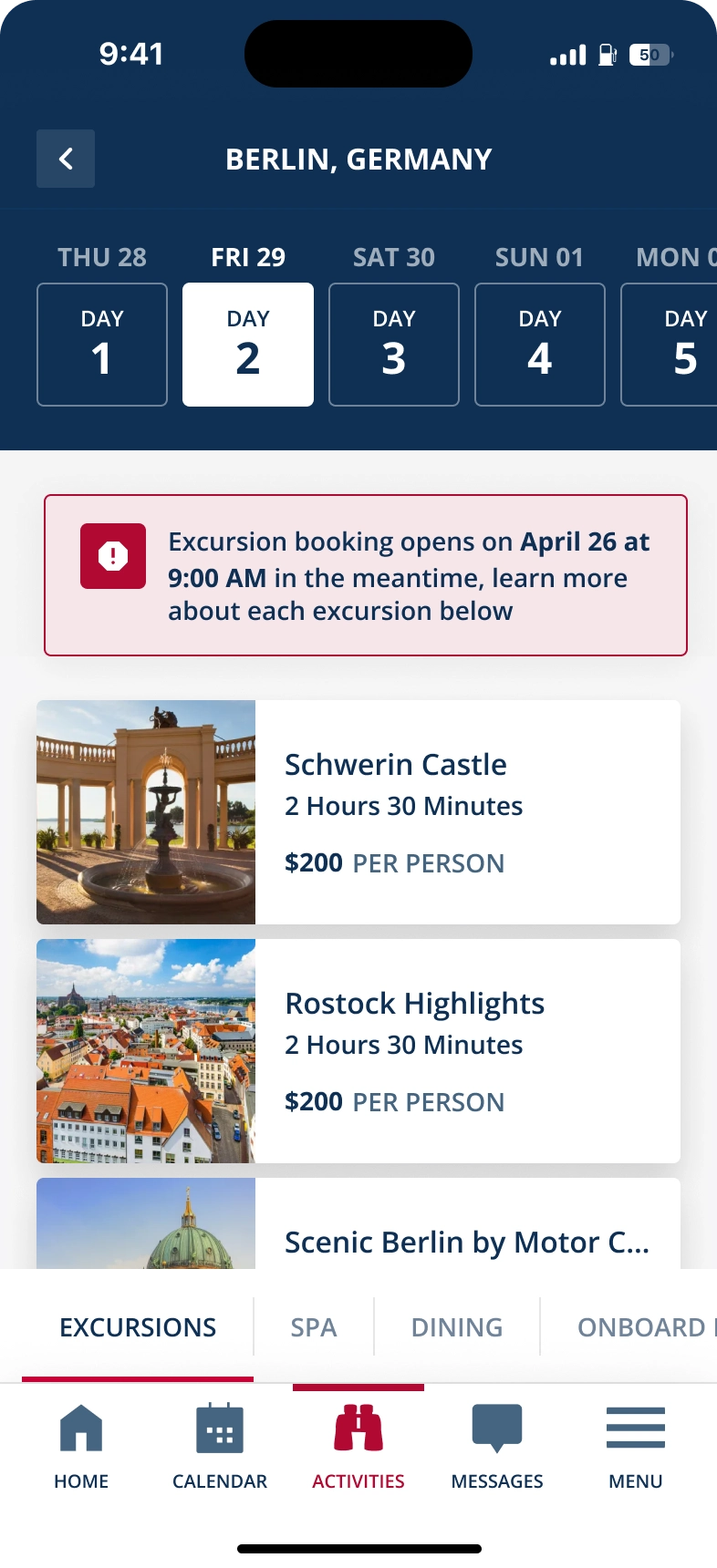
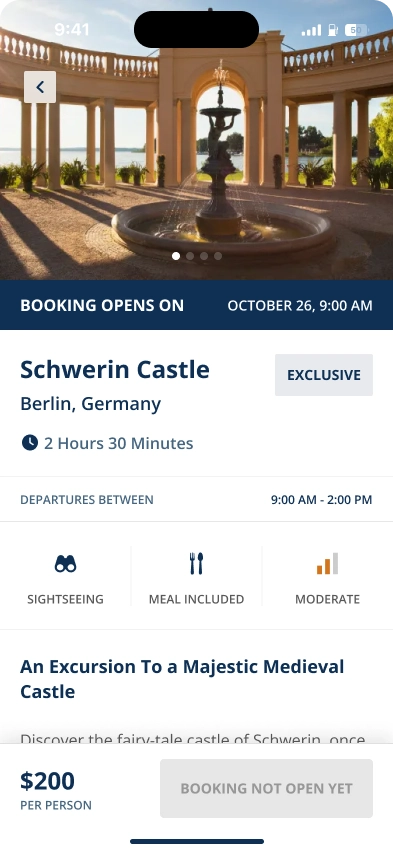
To test our assumptions, we built interactive prototypes and worked with Viking’s research team to put them in front of actual guests. Fueled supplied the prototypes and focused questions for weekly sessions; Viking led the testing and shared the findings for our design reviews.
As an example, for spa and dining bookings, we examined whether showing more available times together helped guests choose or overwhelmed them. This regular cycle of prototyping, guest feedback, and review gave us a way to challenge our assumptions and refine the designs while they were still taking shape.
Bringing clarity to complex travel scenarios
Trips bigger than a single cruise
Viking guests could book consecutive cruises as one trip or add hotel stays booked through Viking before or after sailing. We worked with Viking to show these as parts of one connected itinerary, with guidance for the transitions between them.
On the day between cruises, guests staying on the same ship could still take excursions. For those changing ships, we designed the home screen to emphasize when to leave and how to reach their next ship.
When plans change
Plans sometimes have to change after they’re made. For example, an excursion might be delayed by a road closure, or the ship’s docking location might change at short notice. Through discovery interviews with Viking’s operations teams, we explored how the app could communicate those updates and reduce reliance on letters delivered to guests’ staterooms.
We designed the home screen to draw attention to relevant updates and a message area where guests could read the details. Notifications could include action buttons, connecting an update with the next step a guest needed to take.
A digital experience that doesn’t end with the cruise
For guests preparing to leave the ship, we designed the home screen to highlight their departure meeting time and link to a checklist they could work through.
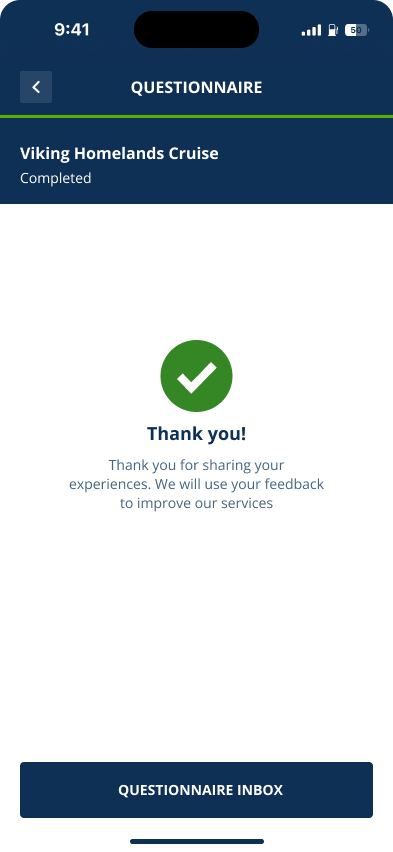
Viking’s team also noted that guests continued logging in after their cruises, even though there was little for them to do at that stage. We designed questionnaires so Viking could request feedback on individual excursions and the cruise as a whole, both during and after the trip.

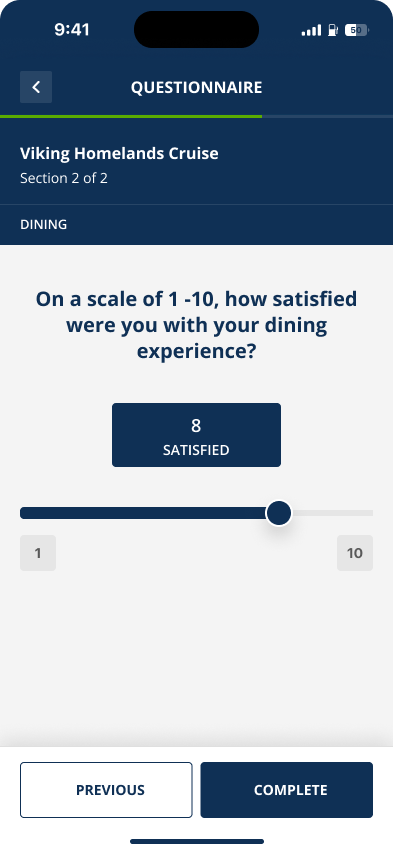
We also brought Viking’s offers for future cruises into the design. Prompts could appear during or after the voyage and link guests to Viking’s booking website.
A design system Viking’s team could build on
Our experience engineering complex web and mobile applications spans both the interfaces people use and the systems behind them. That perspective helped us approach Viking’s design work with the practical demands of implementation in mind.
Working with Viking’s developers, we prepared a shared design system for the app and website. We documented reusable components and how the website’s responsive layouts should adapt between computer and phone screens.
The handoff covered behavior as well as appearance. For example, we defined when information cards should appear and which tasks should become more prominent as a guest’s trip progressed. In working sessions, we walked through these decisions and addressed questions from Viking’s developers.
We also accounted for Viking’s phased development plan. When flight management was assigned to a later app phase, we designed a route to the website so guests could still manage their flights.
By combining guest research, product design, and engineering experience, we helped Viking shape a more connected digital service around the way its guests travel. The work gave its team a shared direction for the app and website, and a design foundation for supporting guests before, during, and after a cruise.