We designed and built a Sanity and Next.js platform for Ayala Land that supports residential brands, hospitality content, multilingual workflows, and booking paths, with AI-native delivery accelerating the work.
Ayala Land is a major real estate and hospitality company in the Philippines, with a portfolio spanning residential development, property management, and hotel brands. As that portfolio expanded, its digital footprint needed to support distinct brands, audiences, property experiences, hotel journeys, and booking paths without becoming a patchwork of disconnected sites.
Fueled’s partnership began with Ayala Land Residential and expanded into Ayala Land Hospitality. Across both sides of the business, the challenge was the same: help people discover the right home, hotel, offer, or destination while giving Ayala Land’s teams a more flexible way to manage content across brands, properties, languages, and launches.
Ayala Land did not need another collection of one-off websites. It needed a platform that could absorb portfolio complexity and turn it into a repeatable model for growth.
Designing around how people discover homes and hotels
Before the platform choices came into focus, Fueled needed to understand how Ayala Land’s portfolio worked for the people using and managing it.
Residential visitors needed to explore communities and properties across locations, property types, and brands. Hospitality travelers might begin with a parent hospitality brand, a city hotel brand, a resort brand, a specific property, an offer, a venue, or a destination. Behind both journeys, Ayala Land’s teams needed to manage content across brands, launches, languages, and ongoing updates.
Fueled translated those needs into experience and content requirements: where shared content should live, where brand-specific expression mattered, how travelers should move from hotel discovery into booking, and how editors should preview, approve, and release large groups of content.
AI-native workflows were part of the strategy and UX work from the start. As Fueled mapped the hospitality experience, the team used AI-native workflows to move faster from requirements and user stories into wireframes, product decisions, and functional requirements. Draft wireframes could be produced in hours, then updated shortly after client conversations, giving Fueled and Ayala Land concrete artifacts to evaluate together.
That speed made the strategy easier to evaluate and align on. Instead of discussing complex flows abstractly, Fueled and Ayala Land could review clickable wireframes together, see how content and booking paths behaved, and make decisions sooner about how the experience should work.
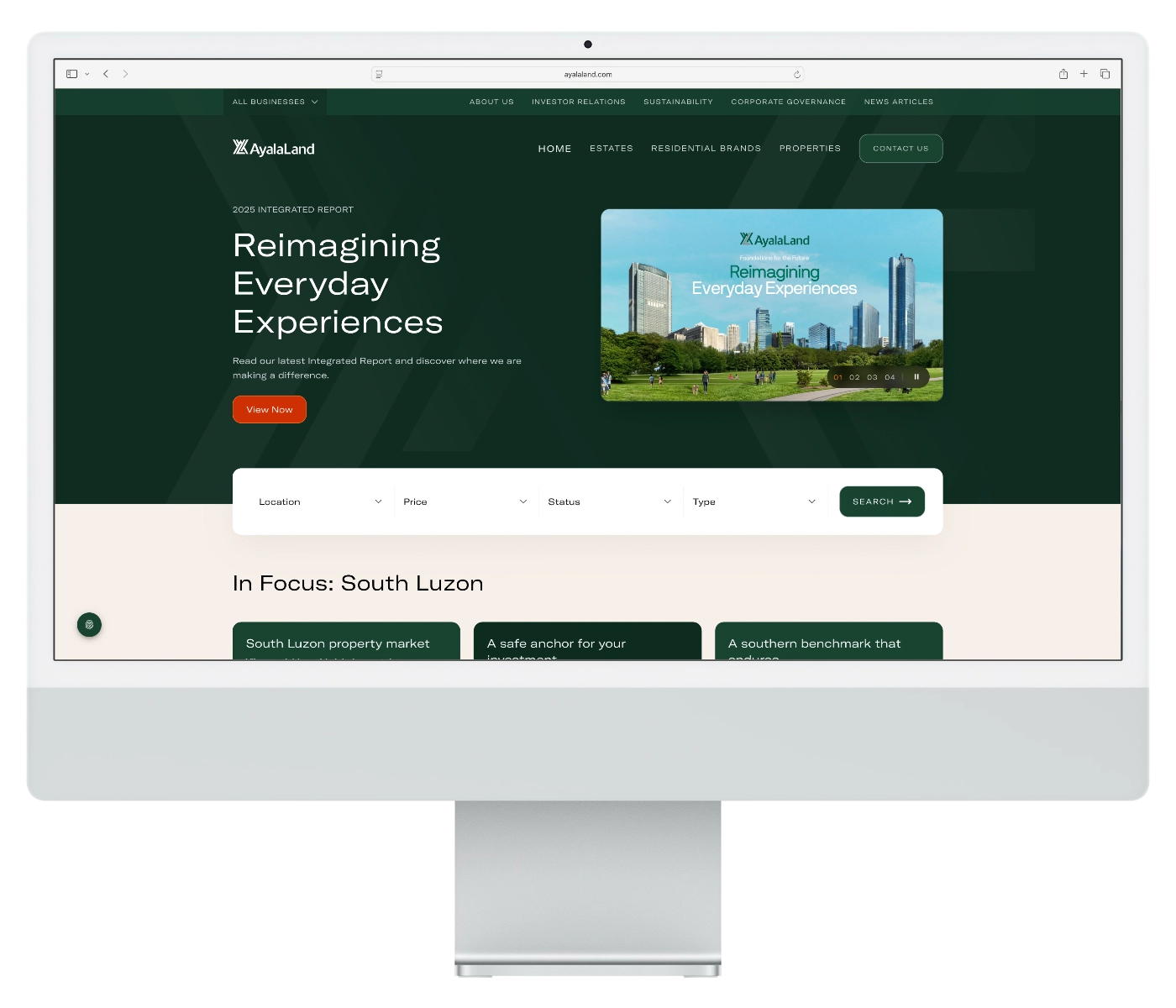
The strategy also shaped the visual design work. The experience needed enough consistency to feel like part of the same Ayala Land portfolio, while giving each residential and hospitality brand room for its own voice, positioning, and visual language. That was especially important for hospitality: the parent Ayala Land Hospitality experience needed to feel cohesive, while Seda and El Nido needed to reflect very different guest expectations, from urban hotel stays to premium resort discovery. The design had to make those differences clear without making the experience feel like a patchwork of unrelated sites.
Fueled’s designers interpreted each brand, shaped the page experience, and made sure the final sites felt polished, premium, and distinct without feeling disconnected from the larger Ayala Land portfolio.
A Sanity and Next.js foundation for portfolio growth
With the strategy clear, the platform needed to support two realities at once: reusable content across related sites and distinct brand experiences for different audiences.
Fueled designed and built the platform with Sanity and Next.js, giving Ayala Land a structured content layer and a fast, flexible front end. As a featured Sanity Agency Partner, Fueled brought deep platform expertise to the work, helping Ayala Land shape a content architecture built for complex editorial workflows, multi-brand reuse, and long-term flexibility.
Sanity let structured content live beyond the boundaries of any single website. Property, hotel, offer, destination, and brand content could be created once, organized centrally, and reused across related experiences without forcing every site or page into the same presentation.
Next.js gave the front end the balance Ayala Land needed: fast pages for discovery-heavy experiences, with dynamic behavior where the journey required it. That included context-aware navigation, SEO metadata, translated content structures, and a booking handoff that could connect the website to Ayala Land’s existing booking engine.
Property discovery that could extend across brands
Fueled’s work with Ayala Land began with the design and build of the corporate Ayala Land Residential site. The site brought communities and properties across the portfolio into a searchable discovery experience, giving visitors a clearer way to explore what Ayala Land offers across locations, property types, and residential brands.
That first engagement established the platform approach, content patterns, and front-end foundation for the next phase: dedicated sites for Avida, Alveo Land, and Ayala Land Premier. The challenge was preserving what made the residential discovery experience useful while giving each brand a site shaped around its own audience, property inventory, market position, and visual identity.
Fueled structured the residential brand sites around a shared codebase and data set, giving Ayala Land separate brand experiences without three separate technical foundations. That approach made the portfolio easier to maintain, improve, and extend, while still giving each brand room to express itself.
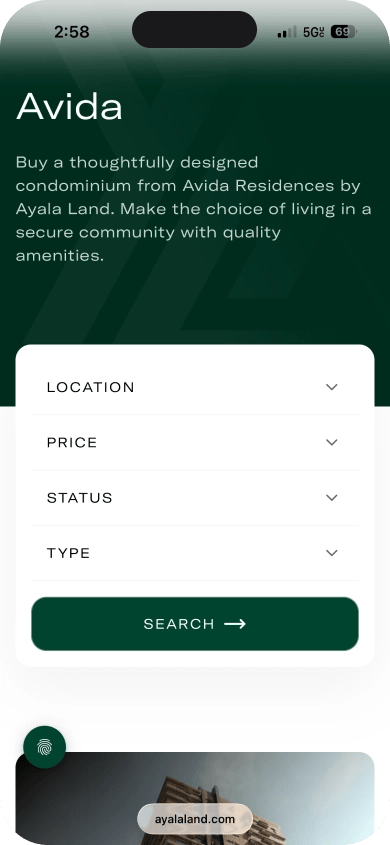
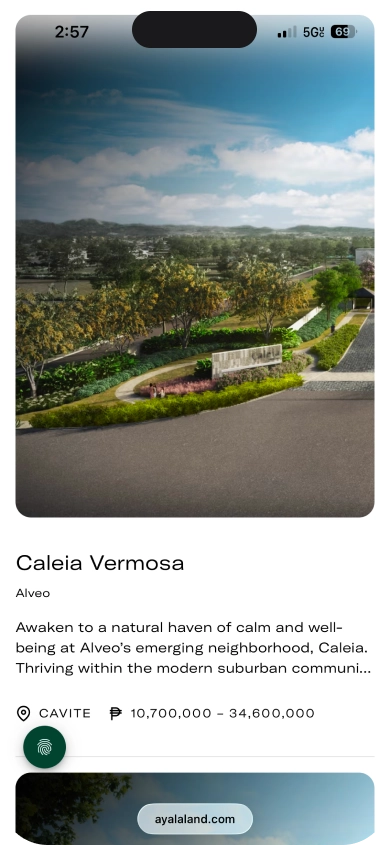
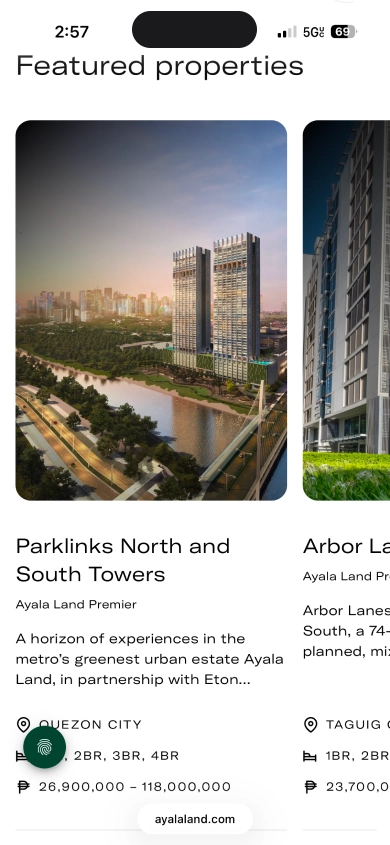
AI-native delivery helped Fueled extend approved features and architectural improvements across the residential sites more efficiently. Once a new feature or improvement was validated in one site, the team used AI-native workflows to apply the same pattern to related sites, then review and test the work instead of manually copying, adapting, and integrating the change site by site. That gave Ayala Land a faster way to keep its residential portfolio consistent while still preserving the differences between each brand experience.
Hospitality content organized around how travelers explore
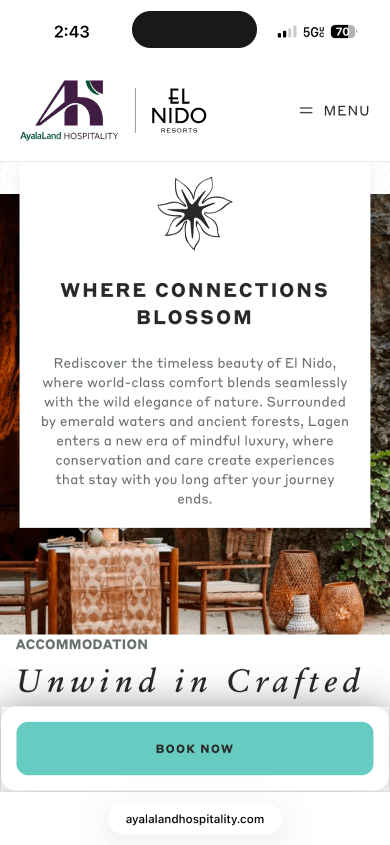
Fueled then designed and built the new Ayala Land Hospitality site on top of the existing Sanity foundation. The site launched with Seda and El Nido, with the platform structured to support additional hotel brands over time.
The hospitality experience had to orient visitors across three levels of content:
- Corporate content, representing Ayala Land Hospitality and its broader vision
- Brand content, representing the distinct voice, positioning, and visual identity of hotel brands like Seda and El Nido
- Hotel content, representing individual properties, rooms, dining, venues, experiences, special offers, and booking paths
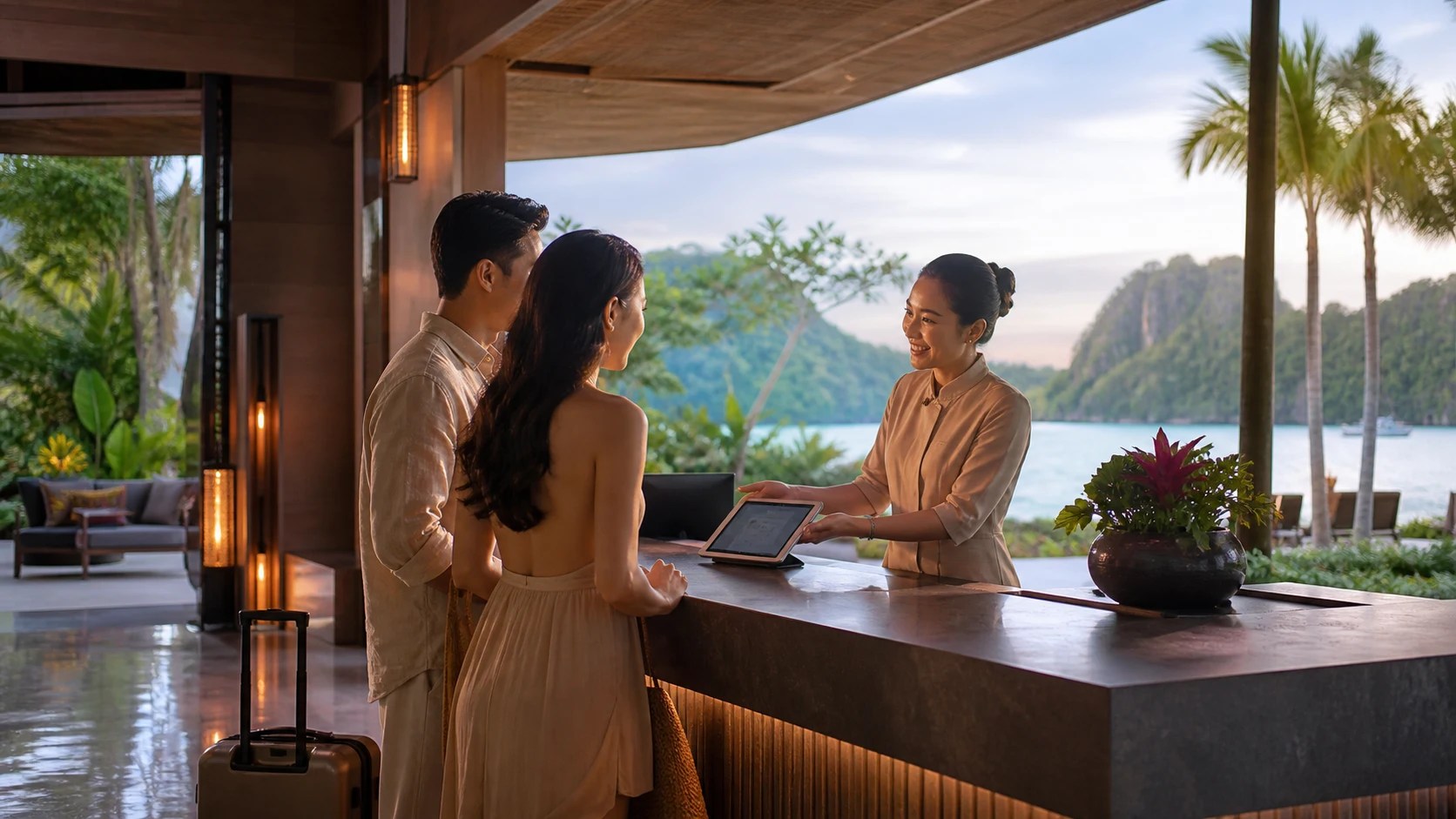
Those layers gave travelers more natural ways into the portfolio. A visitor browsing Ayala Land Hospitality could see offers or brand pathways across the broader portfolio. A visitor exploring Seda could see hotels, venues, and information shared across that brand. A visitor evaluating a specific El Nido property could focus on that hotel’s rooms, dining, experiences, offers, and booking path.
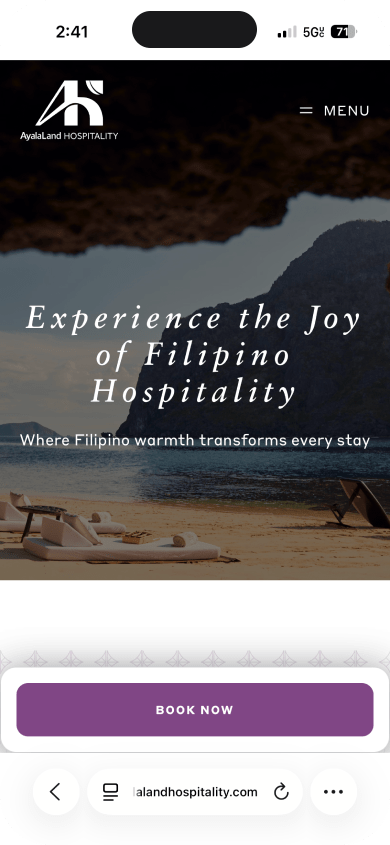
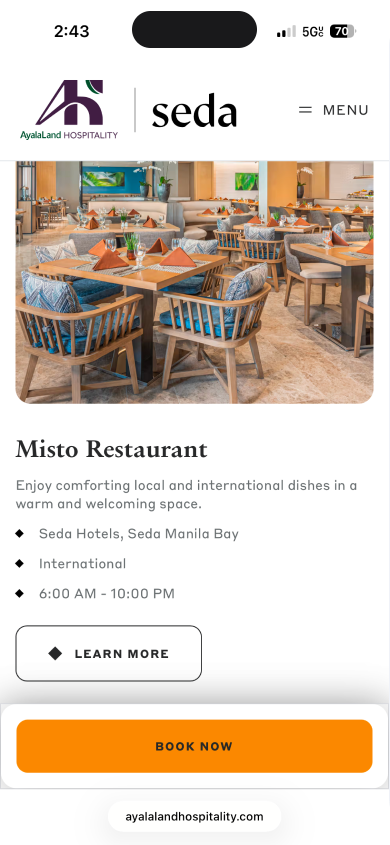
The same structure gave Ayala Land’s teams more control behind the scenes. Editors could manage related content without treating every corporate page, brand page, offer, venue, or hotel page as a disconnected asset. If content applied across several contexts, the platform could reflect those relationships instead of forcing teams to recreate the same information page by page.
A clearer path from hotel discovery to booking
The hospitality site also needed to turn interest into action. Travelers could arrive through different paths, but the experience needed to help them move from exploration into booking without making the site feel fragmented.
Navigation was one of the clearest examples. The hospitality site has corporate pages, brand pages, and individual hotel pages, and each level needs a different menu. A visitor browsing Ayala Land Hospitality needs broad portfolio navigation. A visitor exploring Seda needs links tied to that brand. A visitor viewing a specific hotel needs property-specific links, so a menu item like contact or location points to that hotel, not to a generic hospitality page or another property.
Fueled built the navigation to recognize that context and load the appropriate menu as visitors move between the corporate hospitality site, a hotel brand, or a specific property. Within the same context, the menu stays stable. When the visitor moves to another brand or hotel, the navigation updates to reflect the new part of the portfolio.
That kind of flexibility could have created slow or expensive dynamic requests on every page view. To avoid that, Fueled made the navigation API-driven and cached at the edge, giving Ayala Land context-specific menus without making the experience feel slow.
With booking, Fueled took a pragmatic approach that controlled cost without compromising the guest experience. Rather than rebuilding reservation logic inside the website, Fueled designed a clear handoff into Ayala Land’s existing SynXis booking engine. The site captures the details travelers expect to provide, including dates, hotel, room needs, party size, and coupon codes, then carries that context into SynXis so the booking path feels connected.
That gave Ayala Land a polished booking experience without the cost, risk, and maintenance burden of duplicating a system already built for reservations.
Page speed and the path to booking shaped the technical decisions underneath the experience. Fueled implemented a two-layer caching strategy that reduced expensive dynamic requests to roughly 20 to 25 percent of their original level, cutting request volume by approximately four to five times while preserving the contextual behavior the site required.
Multilingual content workflows built for hospitality scale
A hospitality portfolio includes a high volume of detailed, interconnected content: rooms, amenities, dining outlets, venues, experiences, offers, and destinations. For Ayala Land, that content also needed to support multiple languages, where a new language release, hotel launch, or large content update could involve many related pages that needed to stay accurate and go live together.
Managing that content well required an editorial interface built around the real work of maintaining a hospitality portfolio: editing hotel-level content like rooms, venues, dining, experiences, and offers; organizing large amenities lists; preparing and reviewing translations; previewing draft pages; and coordinating related content for launch.
Fueled customized Sanity Studio to better match the scale and shape of Ayala Land’s content. For example, a hotel room might include a long list of amenities. A simple checklist can work for a dozen options, but it becomes unwieldy when the list grows much larger. Fueled created custom Sanity components that present that kind of content in more usable ways, such as searchable or more compact editorial interfaces.
Fueled also built a data transformation layer between Sanity and the front end. In draft mode, editors may still be working with incomplete content. In production, required content needs to be present, validated, and reliable. The data layer handles those differences, allowing editors to preview pages cleanly while content is in progress and giving visitors more reliable production pages once content is published.
The hospitality site also needed a translation workflow that could support international audiences without giving up editorial control. The site launched first in English, with work underway to support Japanese, Spanish, Korean, and Simplified Chinese versions.
Rather than treating translation as a manual copy-and-paste process, Fueled built a custom workflow inside Sanity. Ayala Land can select content for translation, export it for its external translation agency, import translated files back into Sanity, then review, correct, approve, and release that content in context.
The result is a CMS workflow that lets Ayala Land prepare complex hospitality releases in a more controlled way, rather than coordinating scattered page updates across brands, hotels, and languages.
AI-native delivery accelerated strategy, refactoring, and performance
AI-native delivery helped Fueled move faster where speed could improve the work without loosening control over strategy, architecture, or quality.
The early UX work was one example. Instead of waiting days or weeks for every iteration, Fueled could bring clickable flows back into the conversation quickly, giving the team a faster way to evaluate recommendations with Ayala Land and move toward decisions.
That same discipline carried into engineering. The hospitality site’s listing pages had to work across corporate, brand, and hotel contexts, support filtering, balance static and dynamic behavior, and remain performant. When the initial implementation risked becoming a launch-quality issue, AI-native refactoring helped the team rewrite and later consolidate the feature so it was faster and easier to maintain.
Another example came from the residential platform. As the residential foundation extended into new brand sites, the team identified an existing page-weight issue. Average page weight was around 2.5 megabytes, which could feel slow on mobile or weaker connections. Fueled used AI-native performance analysis to identify a series of small but meaningful improvements, including components that should have been dynamically imported and dependencies that were pulling unnecessary weight into pages. After review and implementation, the average page weight dropped to just over 200 kilobytes, about a 12x reduction.
Fueled’s role remained the same throughout: decide where AI belonged, validate the output, test the work, and own the final product quality. AI-native delivery shortened feedback loops and accelerated execution, while experienced practitioners stayed responsible for the decisions that shaped the platform.
A platform for Ayala Land’s next stage of growth
Fueled gave Ayala Land a stronger digital model for a portfolio that continues to expand: residential discovery that can extend across brands, hospitality content organized around how travelers explore, multilingual workflows for large releases, and booking paths that carry traveler intent into the right system.
Just as importantly, the work shows what AI-native delivery can add to enterprise builds when it is applied with discipline. For Ayala Land, that meant faster alignment, faster refactoring, lighter pages, and a platform that can keep growing across homes, hotels, languages, and customer journeys without rebuilding from scratch each time.